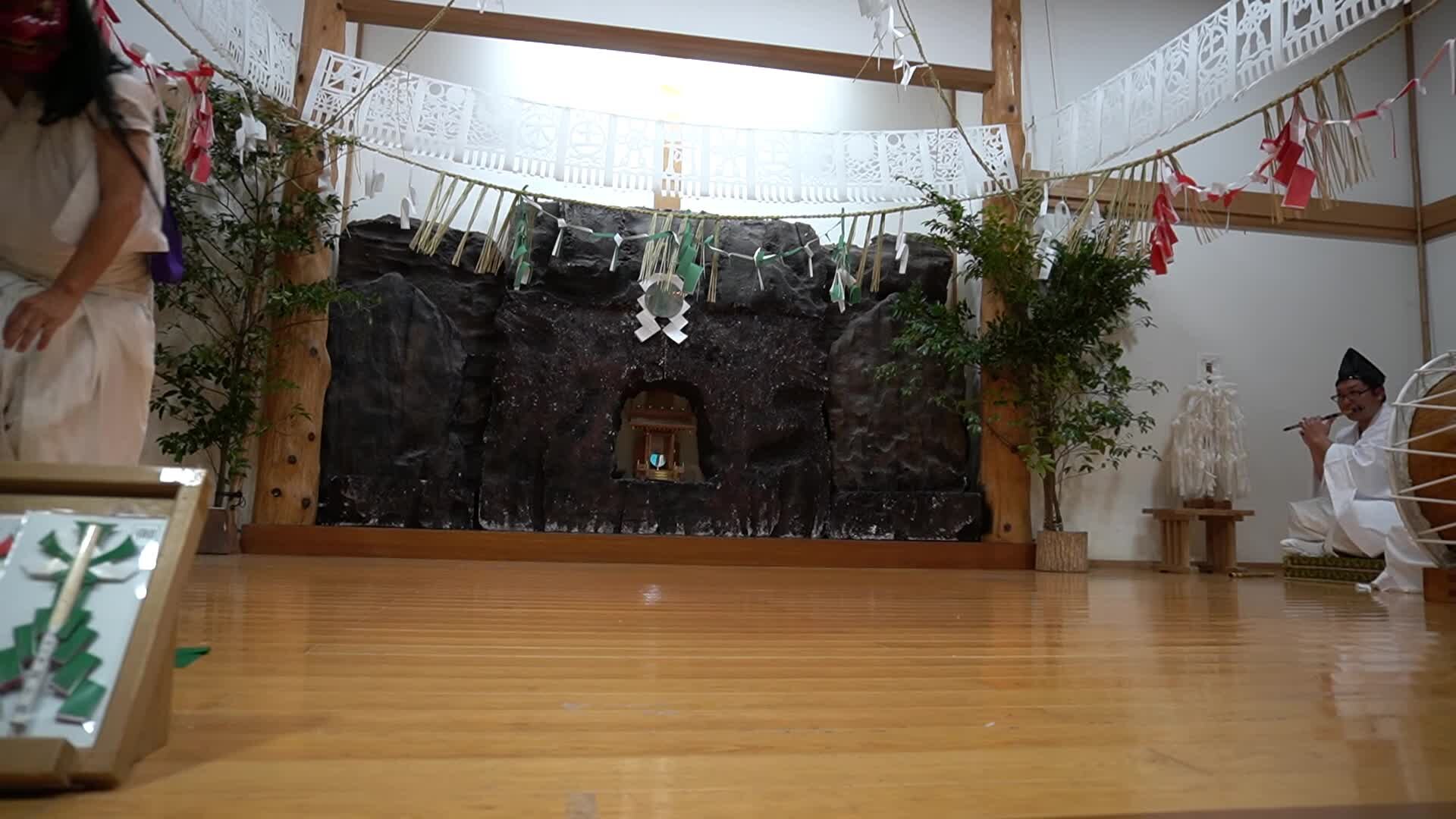
In the mountains of northern Miyazaki, winter nights are filled with flutes, drums and masked dancers telling the oldest stories in Japan. This is Takachiho yokagura, night kagura.
Where the sun goddess hid
Takachiho is closely linked to Japanese mythology. According to legend, the sun goddess Amaterasu hid in a cave here, plunging the world into darkness. The other gods gathered outside, and the goddess Ame no Uzume performed a wild, comic dance. The laughter made Amaterasu curious; she peeked out, and the strong god Tajikarao pulled the rock door open, returning light to the world.
That dance is said to be the origin of kagura, the ritual music and dance performed for Shinto gods and considered one of Japan’s oldest performing arts.
The real thing: all-night yokagura
Takachiho yokagura is designated an Important Intangible Folk Cultural Property of Japan. Each winter, from about mid-November to early February, local communities hold their own yokagura as part of the harvest festival. The gods are invited into a private home or community hall, called a kagura yado, and local performers dedicate all 33 dances one after another, from the evening until the next morning.
Each community has its own schedule and its own version of the dances. Visitors are often welcome, but remember that this is a religious ritual and a community event: be quiet during the dances, follow local guidance, and consider bringing a small offering (hatsuho, such as a bottle of sake or an envelope) as local custom suggests. Ask the Takachiho tourist association for that season’s dates and etiquette.
The easy option: Kagura at Takachiho Shrine
If you cannot visit in winter, Takachiho Shrine holds a one-hour tourist performance in its Kagura Hall every night at 8:00 pm, all year round. Four of the 33 dances are shown, including the dances of Tajikarao and Ame no Uzume and the comic “Goshin-tai” dance of the creator gods Izanagi and Izanami. It is a lively, entertaining introduction even if you do not know the myths.
More to see in Takachiho
- Takachiho Gorge: basalt cliffs and the Manai Falls, best seen from a rowboat.
- Amano Iwato Shrine: it faces the cave where Amaterasu is said to have hidden.
- Amano Yasugawara: a cave where the gods are said to have met, filled with small stone piles left by visitors.
Getting there
Takachiho has no train station. Take a bus from Nobeoka (about 1 hour 20 minutes) or from Kumamoto (about 3 hours), or rent a car. Stay overnight so you can see the evening kagura and the gorge in the morning before the crowds.
Sources and further reading
- Japan Tourism Agency: Takachiho Yokagura Overview
- JNTO: Takachiho Evening Kagura
- Miyazaki Prefecture Tourism: Kagura in Takachiho
- Google Arts & Culture: The Myths, Legends, and Rituals of the Takachiho Night Kagura
Featured image: 鶉野隆央 / Wikimedia Commons (CC0). Practical details such as prices, hours and schedules change often. Please check the official sources before you travel.