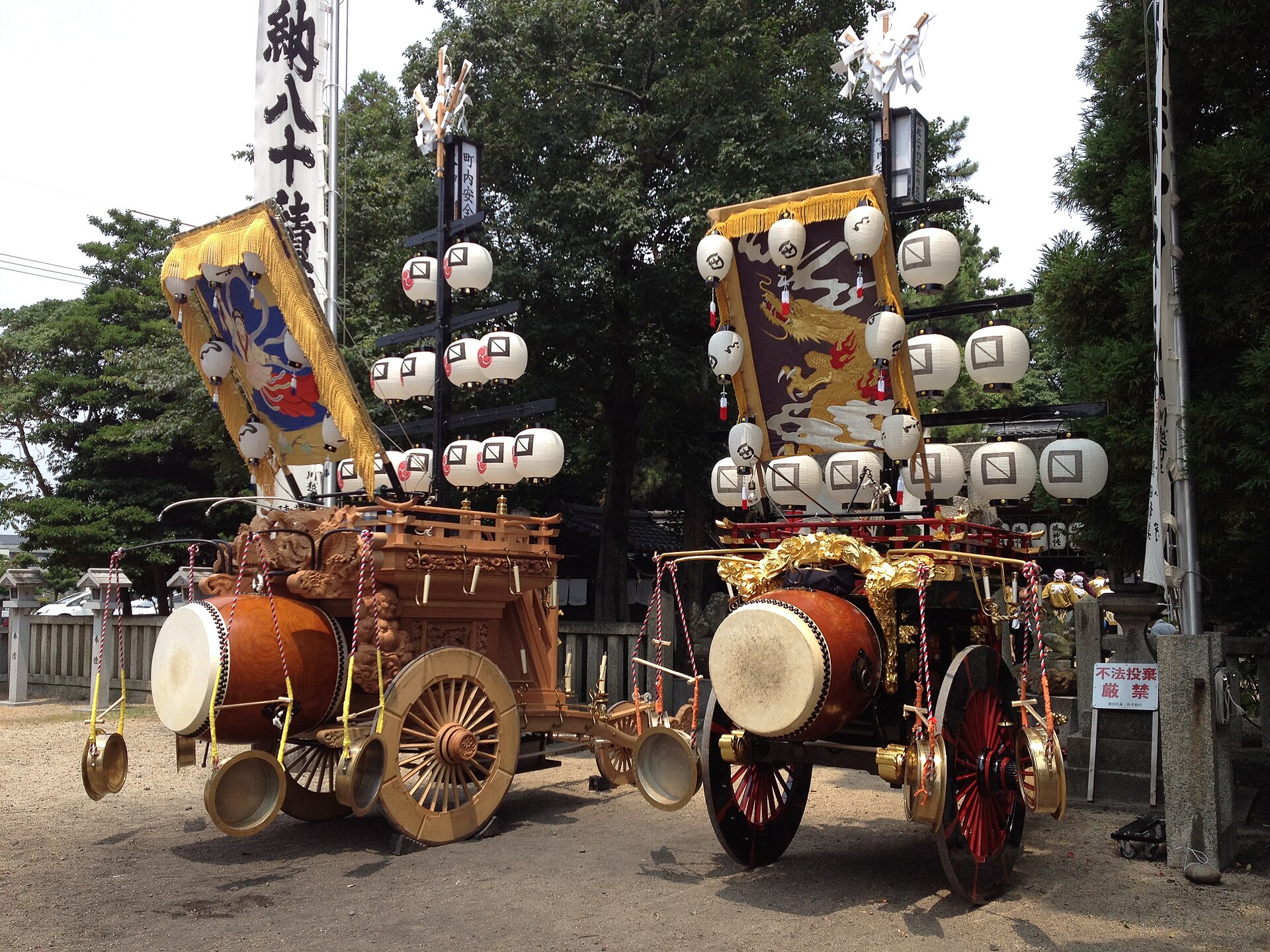
When two towering floats meet at an intersection, they turn their stages to face each other. Drums pound, flutes shriek, masked dancers move faster and faster, and the crowd roars. This is hikkawase, the heart of the Kawagoe Festival.
A festival with 370 years of history
The Kawagoe Festival, officially the Kawagoe Hikawa Festival, is the autumn festival of Kawagoe Hikawa Shrine. It began in 1648, when the lord of Kawagoe Castle, Matsudaira Nobutsuna, donated a portable shrine and ritual objects to the shrine to boost the town’s economy. Merchants later added elaborate floats, modeled on the great festivals of Edo.
In 2005 the float event was designated an Important Intangible Folk Cultural Property, and in 2016 it was inscribed on UNESCO’s Intangible Cultural Heritage list as part of the “Yama, Hoko, Yatai, float festivals in Japan”.
What to see
- The floats: each neighborhood has its own two-story float topped with a doll of a hero or legendary figure, decorated with carvings and embroidered curtains.
- Jinkosai: the sacred procession in which the deity of Hikawa Shrine travels through town in a portable shrine.
- Hikkawase: the musical “battles” between floats, which reach their climax in the evening when the floats are lit by hundreds of paper lanterns.
| Dates | Third Saturday and Sunday of October every year |
|---|---|
| Where | Central Kawagoe, around the warehouse district and Hikawa Shrine |
| Admission | Free |
Tips
- The evening hikkawase is the highlight. Stake out a spot near a main intersection.
- Expect very large crowds and some road closures. Use trains rather than cars.
- If you cannot come in October, visit the Kawagoe Festival Museum, where real floats are on display all year.
Sources and further reading
Featured image: 三塚 / Wikimedia Commons (CC BY-SA 4.0). Practical details such as prices, hours and schedules change often. Please check the official sources before you travel.