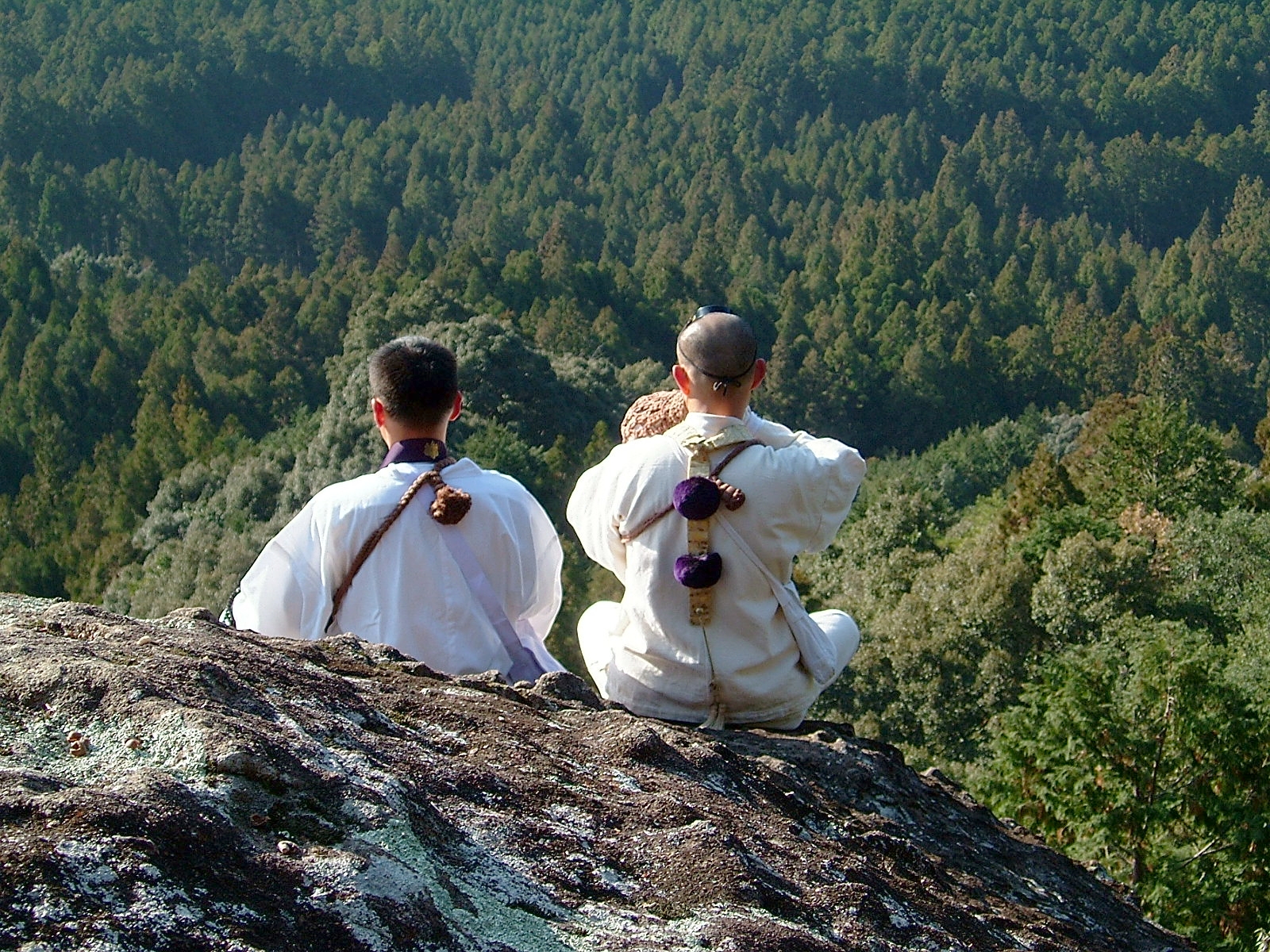
Dressed in white, blowing conch shells and walking up sacred peaks, the yamabushi of northern Japan keep alive one of the country’s oldest spiritual traditions. On the Dewa Sanzan, ordinary travelers can follow in their footsteps.
What is Shugendo?
Shugendo is a form of mountain asceticism that blends Shinto nature worship, esoteric Buddhism and folk beliefs. Its practitioners, the yamabushi (“those who lie in the mountains”), believe that mountains are sacred and that hard physical training in nature brings spiritual rebirth.
Most yamabushi today are not full-time monks. Many have ordinary jobs, and in Haguro many run family pilgrim lodges, returning to the mountains for training and festivals.
The Dewa Sanzan
The Dewa Sanzan, or “Three Mountains of Dewa”, in Yamagata Prefecture is one of the most important centers of Shugendo in Japan. It has a history said to stretch back around 1,400 years.
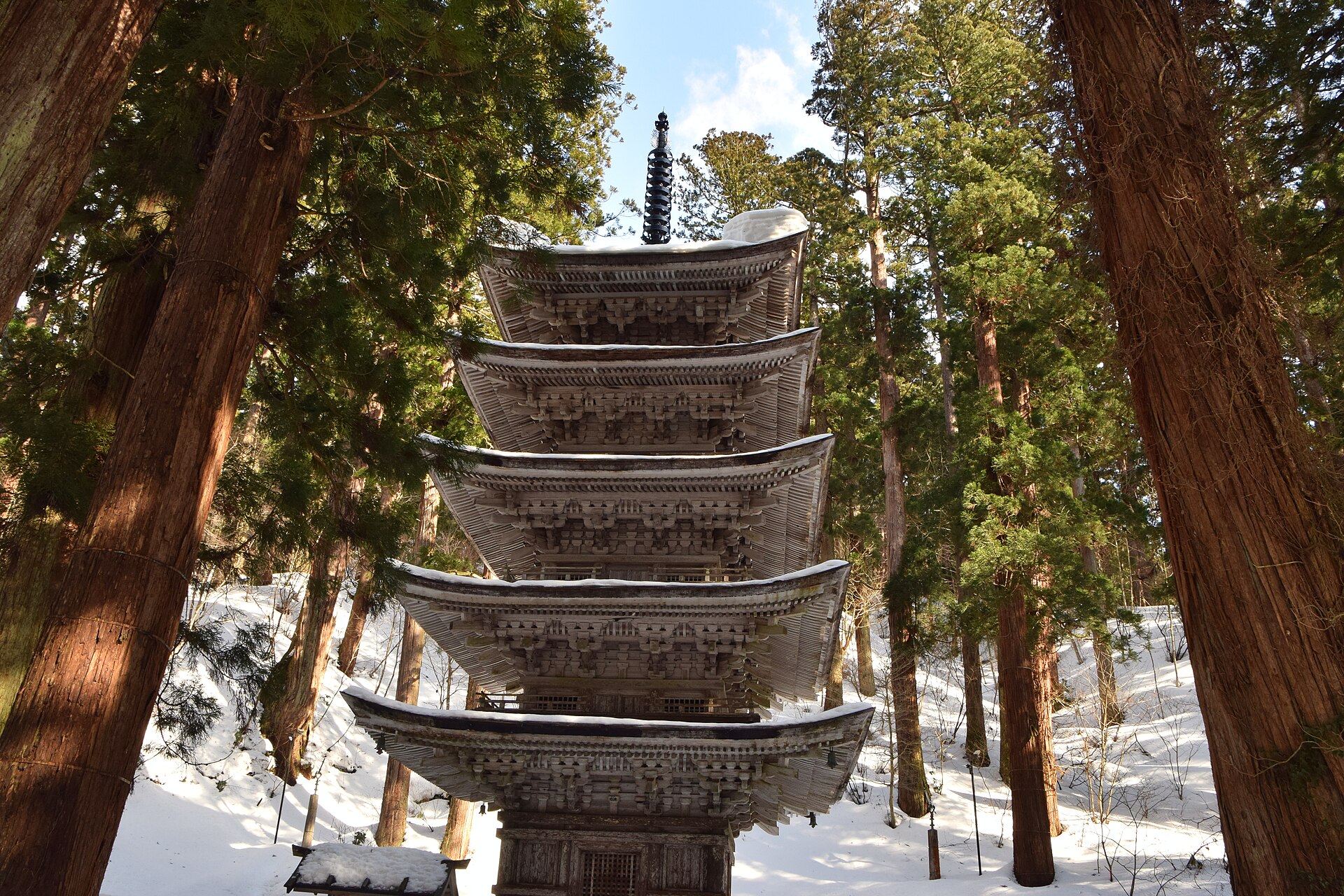
- Mount Haguro (414 m) represents the present. A stone path of more than 2,000 steps climbs through ancient cedars, past a beautiful five-storied pagoda.
- Mount Gassan (1,984 m) represents death and the past. It is the highest of the three and open to hikers only in summer.
- Mount Yudono (1,500 m) represents rebirth and the future. Its sacred site is so holy that photography is forbidden.
Walking the three mountains in order is a symbolic journey through life, death and rebirth.
What happens in yamabushi training?
Training programs (shugyo) are led by certified yamabushi and range from a single day to several days. Details vary by program, but they can include:
- Dressing in the white robes of the yamabushi.
- Long silent hikes on sacred trails, often in rain or darkness.
- Takigyo, meditation under a waterfall.
- Purification rituals, chanting and simple vegetarian meals.
- Staying in a shukubo pilgrim lodge in the village of Toge at the foot of Mount Haguro.
Participants are expected to follow instructions without question. Much of the training is done in silence, and the only reply you are allowed is “uketamo“, meaning “I humbly accept”. Workshops organized by the Haguro tourist association typically run between August and October, while private lodges and operators offer programs at other times too.
Who is it for? You do not need to be religious, but you do need to be reasonably fit and ready for discomfort, cold water and early starts. Programs for international visitors with English support are available. Book well in advance.
Getting there
The gateway town is Tsuruoka. From Tokyo, take the Joetsu Shinkansen to Niigata and transfer to a limited express to Tsuruoka, or fly to Shonai Airport. Buses run from Tsuruoka Station to Toge and the summit of Mount Haguro.
Sources and further reading
- Japan Tourism Agency: Shugendo Training Workshops
- JNTO: Yamabushi Shugyo and Training
- Tohoku Tourism: Yamabushi Training Experience
- Dewasanzan.com
Featured image: 唐山健志郎 (Kenshiro Karayama) / Wikimedia Commons (CC BY-SA 3.0). Practical details such as prices, hours and schedules change often. Please check the official sources before you travel.