Category: Temple Stays

Spend the night in a Japanese temple: meditation, sutra copying and quiet mornings.

  • Kitain Temple: 538 Stone Disciples and the Last Rooms of Edo Castle

    Kitain Temple: 538 Stone Disciples and the Last Rooms of Edo Castle

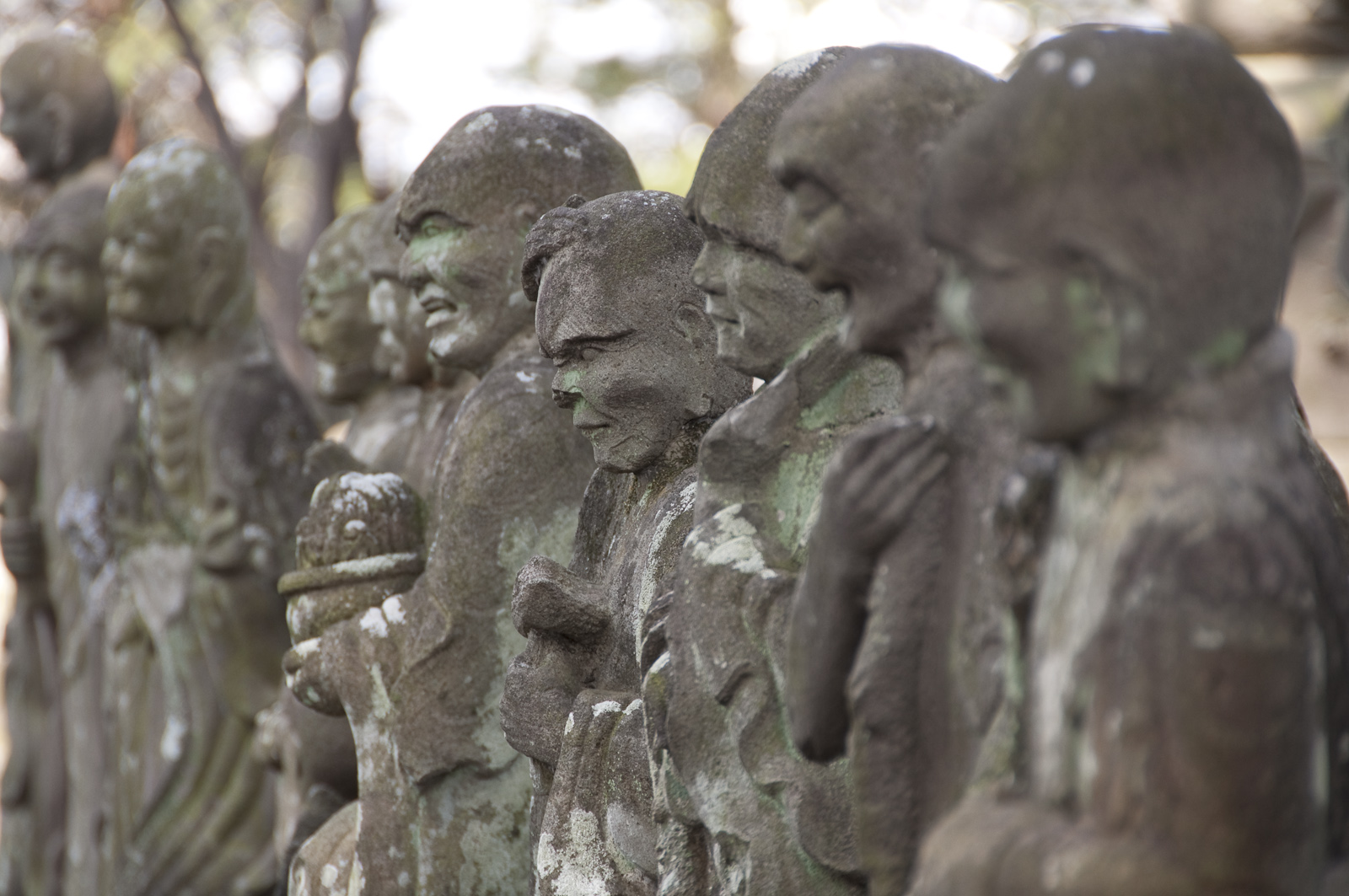
    Laughing, crying, drinking, whispering secrets, scratching an ear: the stone disciples of Kitain show every human emotion. Legend says that if you visit at night and touch their heads, one will feel warm, and it will look like someone you have lost.

    A temple of the shoguns

    Kitain traces its origins to 830 and is a leading temple of the Tendai school in the Kanto region, known locally as Kawagoe Daishi. In the early Edo period, the abbot Tenkai was a close advisor to the first three Tokugawa shoguns, and the temple enjoyed their support.

    When a fire destroyed most of Kitain in 1638, the third shogun, Iemitsu, had several palace buildings moved here from Edo Castle in Tokyo. Edo Castle itself was later lost to fires, the 1923 earthquake and war, so these rooms are the only surviving buildings of Edo Castle. One room, with a painted floral ceiling, is said to be where Iemitsu was born; others are linked to his wet nurse, Lady Kasuga.

    The Gohyaku Rakan

    Beside the temple are the Gohyaku Rakan (“500 arhats”): 538 stone statues of the disciples of the Buddha, carved between 1782 and 1825. No two are alike. Some are chatting, some sleeping, some reading or playing music. It is one of the three great rakan collections in Japan, and finding a statue that looks like you (or a friend) is part of the fun.

    Address1-20-1 Kosenba-machi, Kawagoe, Saitama
    AdmissionAbout 400 yen for adults (Edo Castle rooms, garden and rakan)
    HoursAround 9:00–16:00 (varies by season)
    AccessAbout 15 minutes on foot from Hon-Kawagoe Station or from the warehouse district

    Seasonal highlights

    • Spring: cherry blossoms around the temple and in the garden.
    • Early summer: hydrangeas.
    • January 3: the Daruma Market, one of the biggest in the Kanto region, sells lucky daruma dolls for the new year.

    Sources and further reading

    Featured image: Fg2 / Wikimedia Commons (Public domain). Practical details such as prices, hours and schedules change often. Please check the official sources before you travel.
  • Menuma Shodenzan: Saitama’s “Little Nikko” of Golden Carvings

    Menuma Shodenzan: Saitama’s “Little Nikko” of Golden Carvings

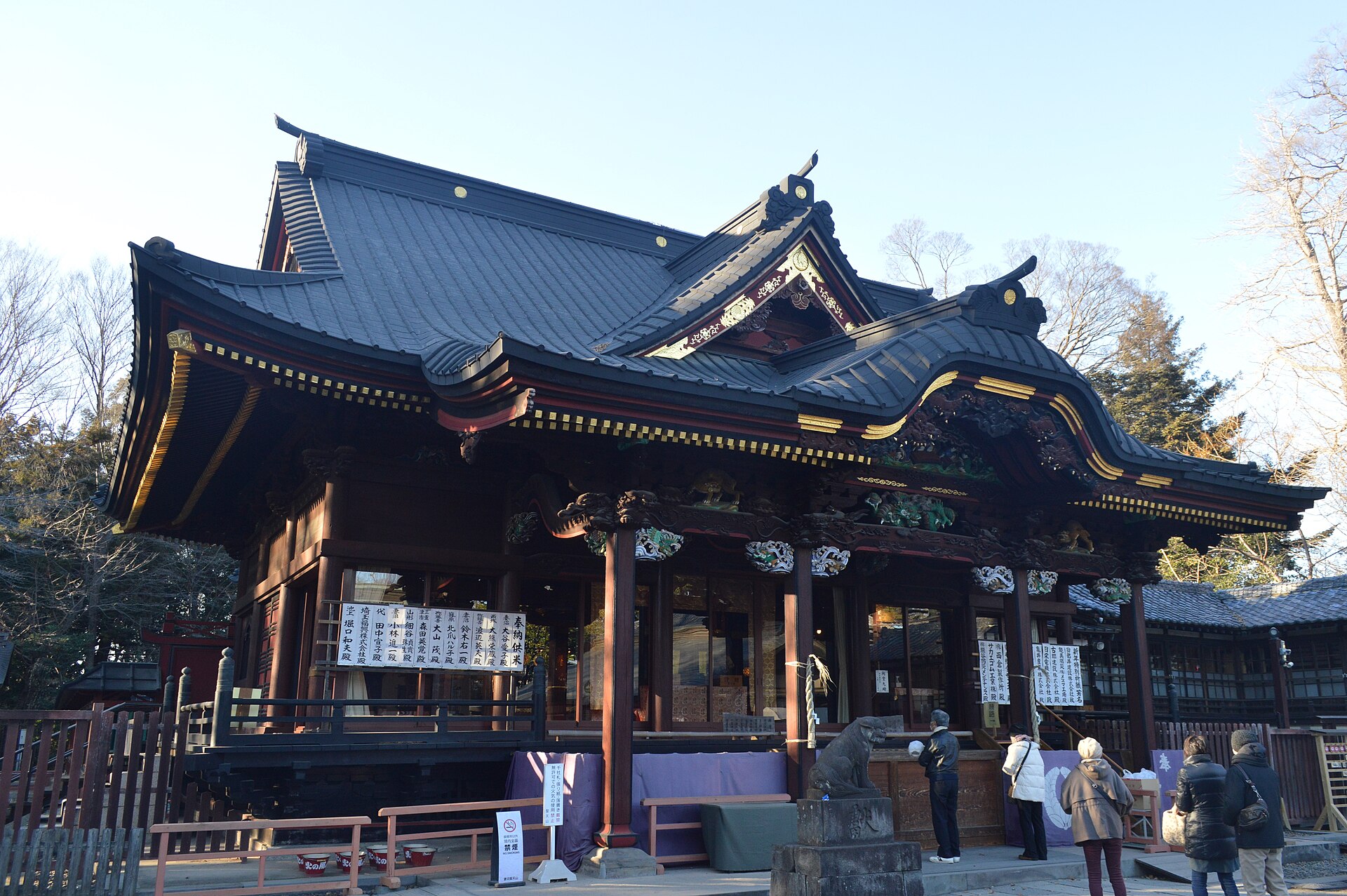
    Gold leaf, vermilion lacquer and thousands of carved figures: the main hall of Menuma Shodenzan is one of the most dazzling buildings in eastern Japan, and almost nobody outside Japan knows about it.

    A temple founded by a legendary samurai

    Menuma Shodenzan Kangiin was founded in 1179 by Saito Sanemori, a samurai whose story appears in The Tale of the Heike and in the Noh play Sanemori. A statue of him stands inside the grounds. The temple is dedicated to Shoden (Kangiten), a Buddhist deity of joy, harmony between couples and success, often linked to the Hindu god Ganesha. It is counted as one of the three great Shoden temples of Japan.

    The Shodendo: a National Treasure

    The main hall, the Shodendo, was completed in the mid-18th century after earlier buildings were lost to fire. It is built in the ornate gongen-zukuri style of Nikko Toshogu, and its outer walls are covered in colorful three-dimensional carvings of Buddhist teachings, Chinese legends and everyday scenes, such as two goddesses playing a board game.

    What makes it special is who paid for it. Most grand buildings of the Edo period were funded by shoguns and lords, but the Shodendo was built with donations from local people. A major restoration completed in 2011 brought back its original colors, and in 2012 it became the first building in Saitama Prefecture to be designated a National Treasure.

    For a small fee, you can walk around the back of the hall to see the carvings up close. Take your time: every panel tells a story.

    Also on the grounds

    • The Kisomon gate, with its unusual triple gables.
    • A stroll garden with Buddhist statues and a small pagoda.
    • The “wedded trees” (meoto no ki), two trees with intertwined roots believed to bring a happy relationship.
    • Cherry blossoms in spring.

    Getting there

    From JR Kumagaya Station (Joetsu/Hokuriku Shinkansen or Takasaki Line), take an Asahi bus bound for Ota Station, Nishi-Koizumi or Menuma Shoden-mae and get off at Menuma Shoden-mae (about 25 minutes).

    Sources and further reading

    Featured image: Asturio Cantabrio / Wikimedia Commons (CC BY-SA 4.0). Practical details such as prices, hours and schedules change often. Please check the official sources before you travel.
  • Jikoji: A 1,300-Year-Old Mountain Temple in Tokigawa, Saitama

    Jikoji: A 1,300-Year-Old Mountain Temple in Tokigawa, Saitama

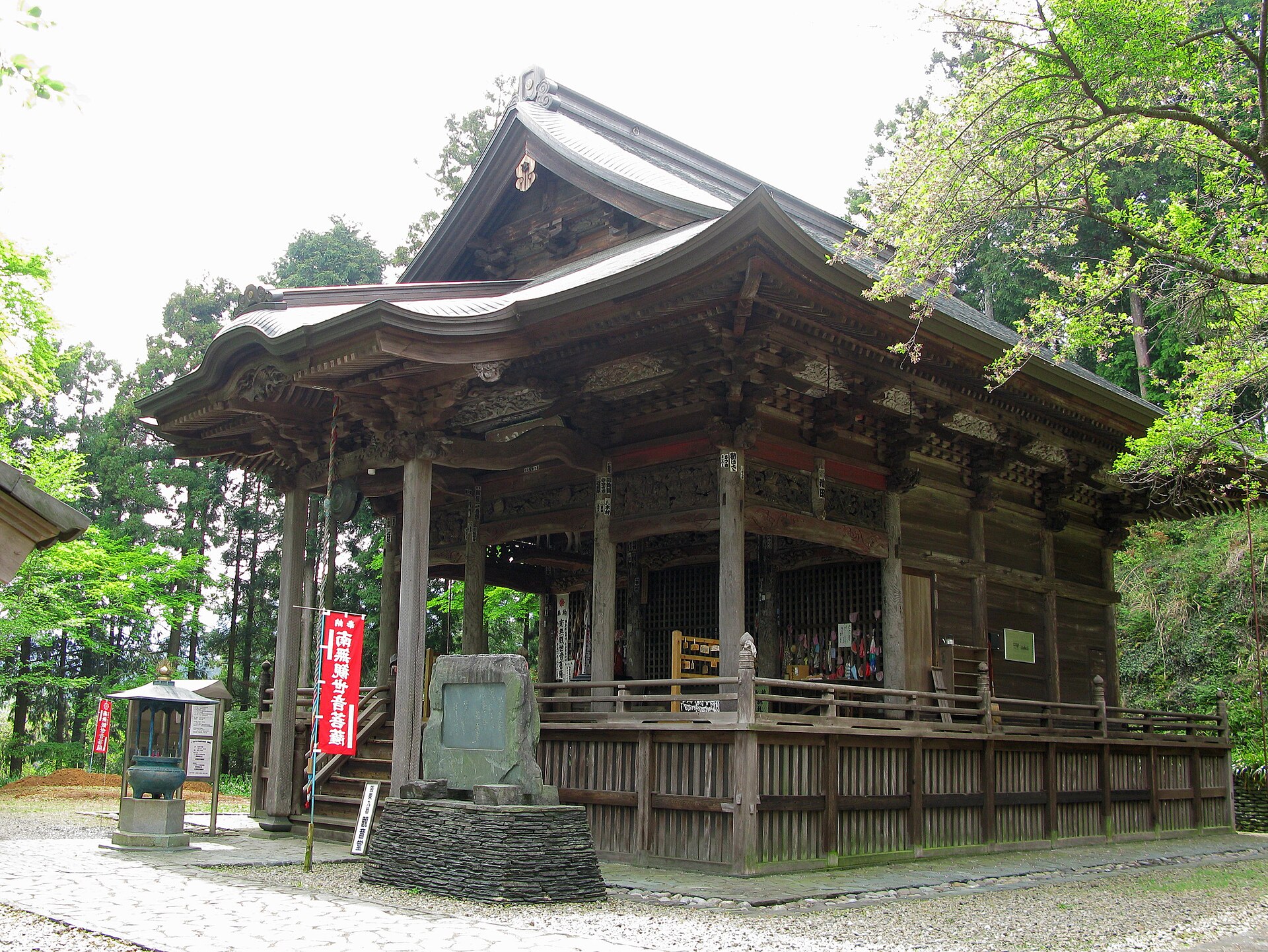
    Only about an hour and a half from central Tokyo, the road climbs into cedar-covered hills and ends at a temple older than Kyoto itself. Few international visitors have heard of Jikoji, which is exactly why it is worth the trip.

    One of the oldest temples in Saitama

    According to temple tradition, Jikoji was founded in 673, when a monk from Kofuku-ji in Nara set up a hall for a Thousand-Armed Kannon on this mountain. Around a century later, a disciple of the famous Chinese monk Ganjin formally established the temple. It belongs to the Tendai school of Buddhism and is one of the Bando Sanjusankasho, a pilgrimage of 33 Kannon temples across eastern Japan.

    In the Kamakura period, Jikoji was a powerful mountain monastery. It is said that Minamoto no Yoritomo, the first Kamakura shogun, prayed here for victory, and that the mountain once held around 75 monks’ lodgings. Little of that scale remains today, but walking up the stone paths between the old halls, it is easy to imagine.

    What to see

    • The Kannon Hall, the heart of the temple and a stop for Bando pilgrims.
    • The treasure hall, which holds important Buddhist art and sutras. Some of the temple’s most valuable objects are kept at the Tokyo National Museum, and a full-size replica of one of its old structures is shown at the Saitama Prefectural Museum of History and Folklore.
    • Old stone monuments and quiet forest paths around the temple, especially beautiful in fresh green and autumn colors.
    • Hydrangeas in early summer, when the hillside path becomes a tunnel of blue and purple.
    Address386 Nishidaira, Tokigawa, Hiki District, Saitama
    GroundsFree to enter
    Treasure hallAround 300 yen for adults; open roughly 9:00–16:00
    Getting thereFrom Musashi-Ranzan Station (Tobu Tojo Line), take the Tokigawa town bus to Seseragi Bus Center (about 30 min), then change to the bus for Jikoji (about 9 min)

    Make a day of it

    Combine Jikoji with a hike on the Tokigawa trekking course toward Mount Doudaira, a soak at one of Tokigawa’s hot springs, and a stop at the local farmers’ market for seasonal vegetables. If you have time, stay overnight at the Doudaira Observatory for some of the best stargazing near Tokyo.

    Tip: buses to Jikoji are infrequent. Check the return timetable before you go, or travel by car.

    Sources and further reading

    Featured image: 京浜にけ at Japanese Wikipedia / Wikimedia Commons (CC BY-SA 3.0). Practical details such as prices, hours and schedules change often. Please check the official sources before you travel.
  • Zen at Eiheiji: Staying Overnight at a Working Zen Monastery

    Zen at Eiheiji: Staying Overnight at a Working Zen Monastery

    Founded in 1244, Eiheiji (“Temple of Eternal Peace”) is not a museum. Around a hundred young monks live and train here, following a daily routine that has barely changed in centuries.

    The head temple of Soto Zen

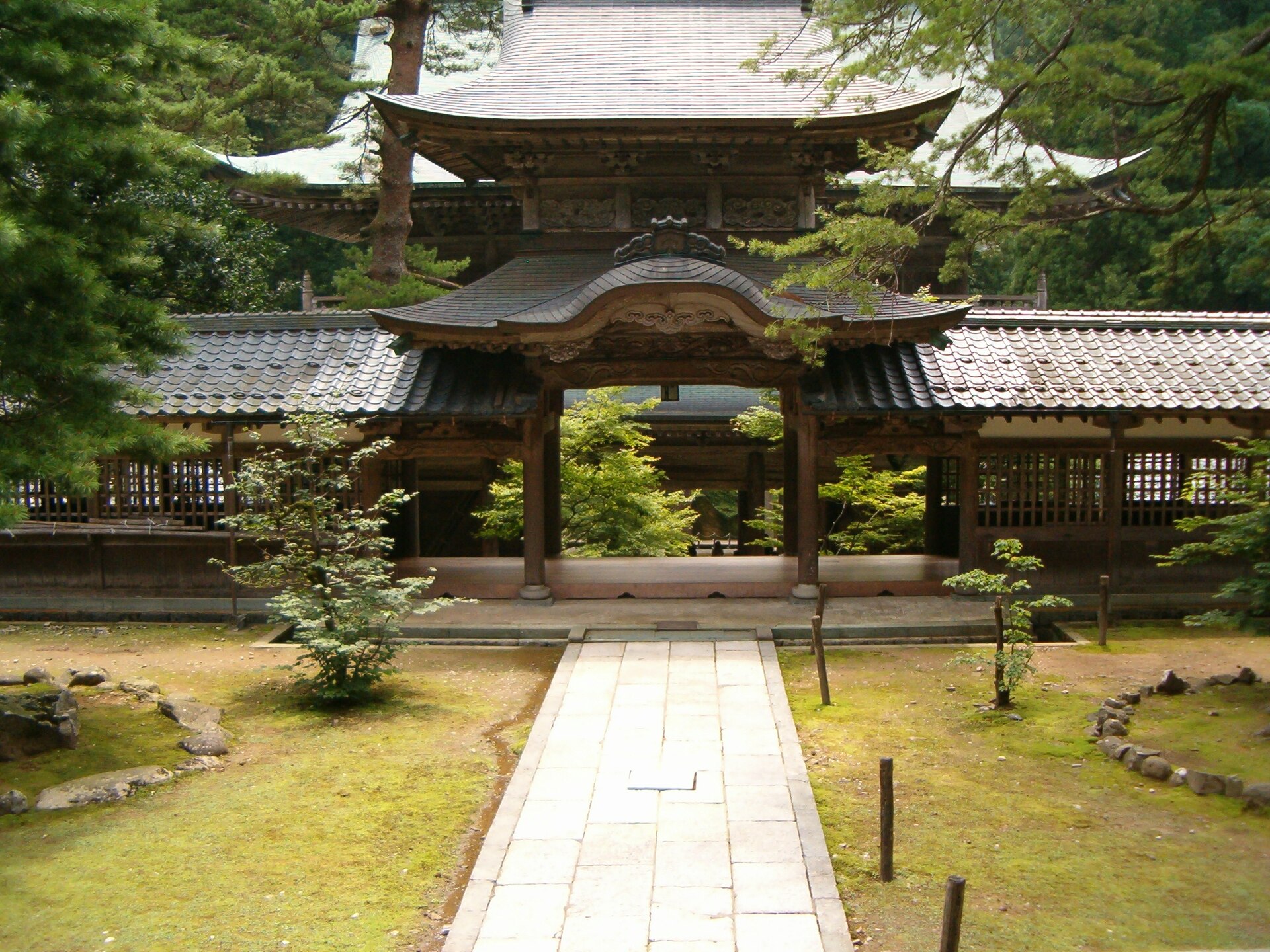
    Eiheiji was founded by the Zen master Dogen (1200–1253), who brought Soto Zen from China to Japan. Hidden in a forest of giant cedars in the mountains of Fukui Prefecture, the temple has around 70 buildings connected by covered corridors and wooden staircases. Monks polish these floors every day as part of their training.

    Day visitors can walk through much of the complex, but the real Eiheiji is the rhythm of monastic life: zazen meditation, chanting, cleaning and silent meals.

    Overnight Zen programs

    Eiheiji has long offered overnight programs (known as sanro and sanzen) in which guests follow the monks’ schedule. Participants typically:

    • Practice zazen (seated meditation) under the guidance of a monk.
    • Join the early morning service, which begins before dawn.
    • Eat shojin ryori in the monastic style, in complete silence and following strict etiquette.
    • Sleep in communal rooms and use shared baths.

    Important: because Eiheiji is an active training monastery, overnight places are very limited and the programs are sometimes suspended or offered only in Japanese. The temple has announced periods when the program is not available to international visitors. Always check the official website before planning your trip, and apply well in advance (at least a month ahead is usually required).

    An easier alternative: Hakujukan

    If you cannot get a place in the monastery itself, Hakujukan is a modern lodging in front of the temple promoted by Eiheiji as part of its “Zen village” project. Guests can join some of the temple’s activities, such as the early morning service, and staff trained by Eiheiji monks guide beginners through zazen. It is a comfortable way to experience Zen while still waking up before dawn.

    Etiquette for visitors

    • Dress modestly and speak quietly. This is a place of practice.
    • Photography is restricted in some areas. Follow the signs and the monks’ instructions.
    • Do not expect a hotel experience inside the monastery. The point is discipline, not comfort.

    Getting there

    From JR Fukui Station, take the Echizen Railway to Eiheiji-guchi and change to a bus, or take a direct express bus from Fukui Station (about 30 minutes). Fukui is now on the Hokuriku Shinkansen, making it easier to reach from Tokyo and Kanazawa.

    Sources and further reading

    Featured image: Supermidget / Wikimedia Commons (Public domain). Practical details such as prices, hours and schedules change often. Please check the official sources before you travel.

  • A Night in a Koyasan Temple: Shukubo, Shojin Ryori and the Okunoin Night Walk

    A Night in a Koyasan Temple: Shukubo, Shojin Ryori and the Okunoin Night Walk

    High in the mountains of Wakayama, Koyasan (Mount Koya) is one of the holiest places in Japan and one of the best places to sleep inside a working Buddhist temple.

    The mountain of Kobo Daishi

    Koyasan was founded in 816 by the monk Kukai, known after his death as Kobo Daishi, as the center of Shingon Buddhism. Today the mountaintop town is home to Kongobu-ji, the head temple of the Shingon school, and to Okunoin, where Kobo Daishi is believed to rest in eternal meditation. The area is part of the UNESCO World Heritage Site “Sacred Sites and Pilgrimage Routes in the Kii Mountain Range”.

    What is a shukubo?

    A shukubo is lodging run by a temple. Pilgrims have stayed in them for centuries. At Koyasan, more than 50 temples offer rooms, from simple and traditional to surprisingly comfortable. Rooms are usually Japanese style, with tatami mats and futons, and many temples have beautiful gardens and halls decorated with old paintings and calligraphy.

    A typical stay

    • Afternoon: check in, walk around the temple grounds and visit Danjo Garan and Kongobu-ji.
    • Evening: dinner of shojin ryori, the vegetarian cuisine of Buddhist monks. It contains no meat, no fish and no strong-smelling vegetables such as garlic or green onions. Local specialties include sesame tofu, koya-dofu (freeze-dried tofu) and yuba (tofu skin).
    • Night: join a guided night tour of Okunoin (see below).
    • Early morning: the morning service usually starts around 6:00 and lasts roughly 40 minutes. Guests are welcome to sit in as the monks chant sutras by candlelight. Attendance is normally optional.
    • After breakfast: many temples offer ajikan (Shingon meditation), sutra copying or a goma fire ritual.

    Okunoin after dark

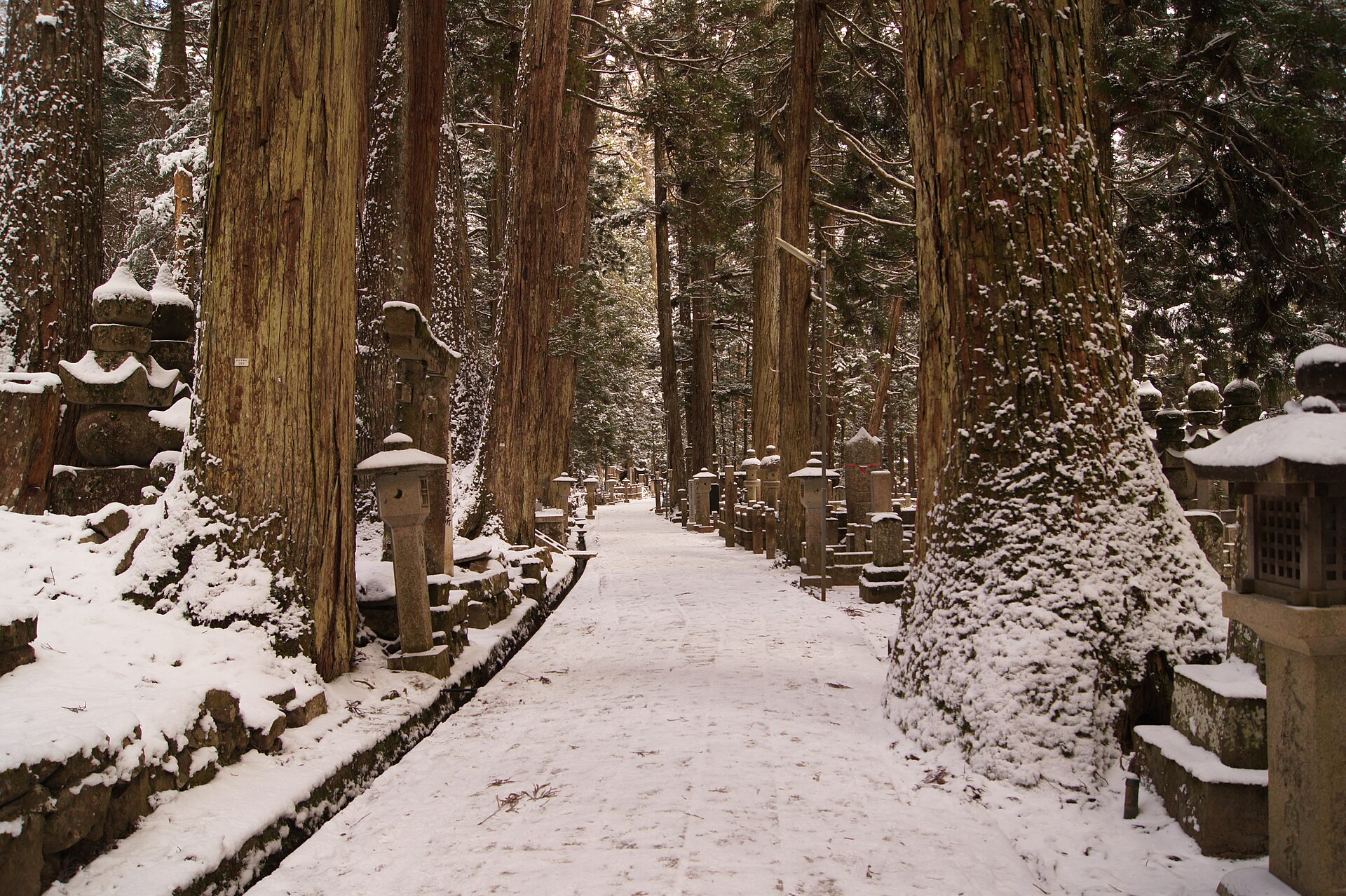
    Okunoin is the largest cemetery in Japan, with more than 200,000 graves and memorials lining a path of about two kilometers through giant cedar trees. By day it is atmospheric. At night, with only stone lanterns lighting the way, it is unforgettable. Guided night tours, often led by a monk who explains Buddhist beliefs and the stories behind famous graves, leave from the town in the evening. Bring a light jacket. The mountain is cold even in summer.

    Practical tips

    • Book well ahead, especially for autumn leaves and weekends. Many temples can be reserved through the Koyasan Shukubo Association.
    • Expect shared toilets and baths in older temples, early dinners and fixed bath times.
    • Most guests arrive from Osaka: take the Nankai Koya Line from Namba to Gokurakubashi, then the cable car and a short bus ride.
    • Winters are snowy and cold. Snow on the cedars of Okunoin is magical, but bring warm clothes.

    Sources and further reading

    Featured image: Crystalline Radical / Wikimedia Commons (CC BY 2.0). Practical details such as prices, hours and schedules change often. Please check the official sources before you travel.