High in the mountains of Wakayama, Koyasan (Mount Koya) is one of the holiest places in Japan and one of the best places to sleep inside a working Buddhist temple.
The mountain of Kobo Daishi
Koyasan was founded in 816 by the monk Kukai, known after his death as Kobo Daishi, as the center of Shingon Buddhism. Today the mountaintop town is home to Kongobu-ji, the head temple of the Shingon school, and to Okunoin, where Kobo Daishi is believed to rest in eternal meditation. The area is part of the UNESCO World Heritage Site “Sacred Sites and Pilgrimage Routes in the Kii Mountain Range”.
What is a shukubo?
A shukubo is lodging run by a temple. Pilgrims have stayed in them for centuries. At Koyasan, more than 50 temples offer rooms, from simple and traditional to surprisingly comfortable. Rooms are usually Japanese style, with tatami mats and futons, and many temples have beautiful gardens and halls decorated with old paintings and calligraphy.
A typical stay
- Afternoon: check in, walk around the temple grounds and visit Danjo Garan and Kongobu-ji.
- Evening: dinner of shojin ryori, the vegetarian cuisine of Buddhist monks. It contains no meat, no fish and no strong-smelling vegetables such as garlic or green onions. Local specialties include sesame tofu, koya-dofu (freeze-dried tofu) and yuba (tofu skin).
- Night: join a guided night tour of Okunoin (see below).
- Early morning: the morning service usually starts around 6:00 and lasts roughly 40 minutes. Guests are welcome to sit in as the monks chant sutras by candlelight. Attendance is normally optional.
- After breakfast: many temples offer ajikan (Shingon meditation), sutra copying or a goma fire ritual.
Okunoin after dark
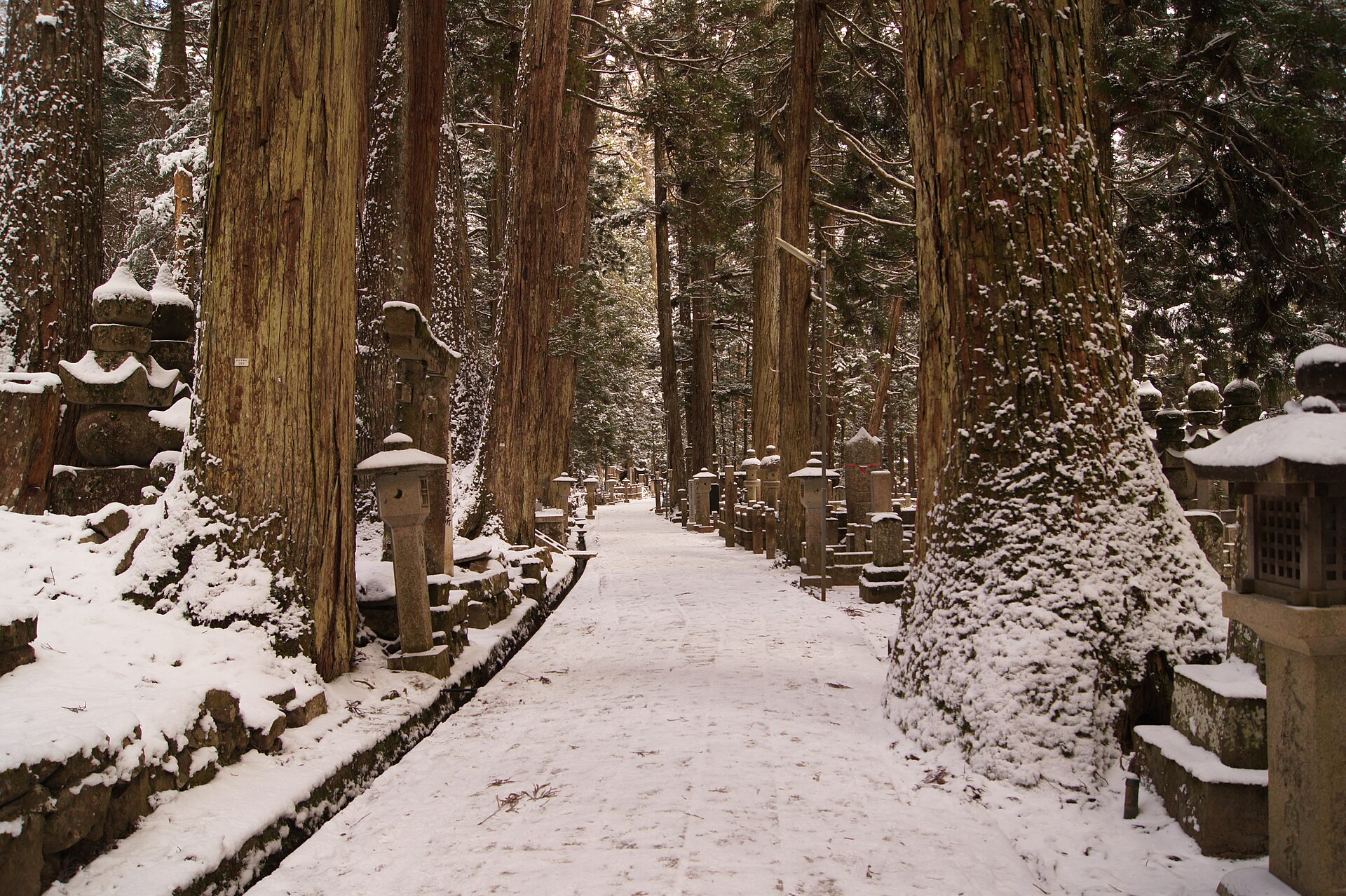
Okunoin is the largest cemetery in Japan, with more than 200,000 graves and memorials lining a path of about two kilometers through giant cedar trees. By day it is atmospheric. At night, with only stone lanterns lighting the way, it is unforgettable. Guided night tours, often led by a monk who explains Buddhist beliefs and the stories behind famous graves, leave from the town in the evening. Bring a light jacket. The mountain is cold even in summer.
Practical tips
- Book well ahead, especially for autumn leaves and weekends. Many temples can be reserved through the Koyasan Shukubo Association.
- Expect shared toilets and baths in older temples, early dinners and fixed bath times.
- Most guests arrive from Osaka: take the Nankai Koya Line from Namba to Gokurakubashi, then the cable car and a short bus ride.
- Winters are snowy and cold. Snow on the cedars of Okunoin is magical, but bring warm clothes.
Sources and further reading
- JNTO: Koyasan Shukubo (Temple Lodgings)
- Japan-guide.com: Koyasan temple lodgings
- Ekoin: Experience temple life
- Osaka Info: Shukubo and Shojin ryori
Featured image: Crystalline Radical / Wikimedia Commons (CC BY 2.0). Practical details such as prices, hours and schedules change often. Please check the official sources before you travel.