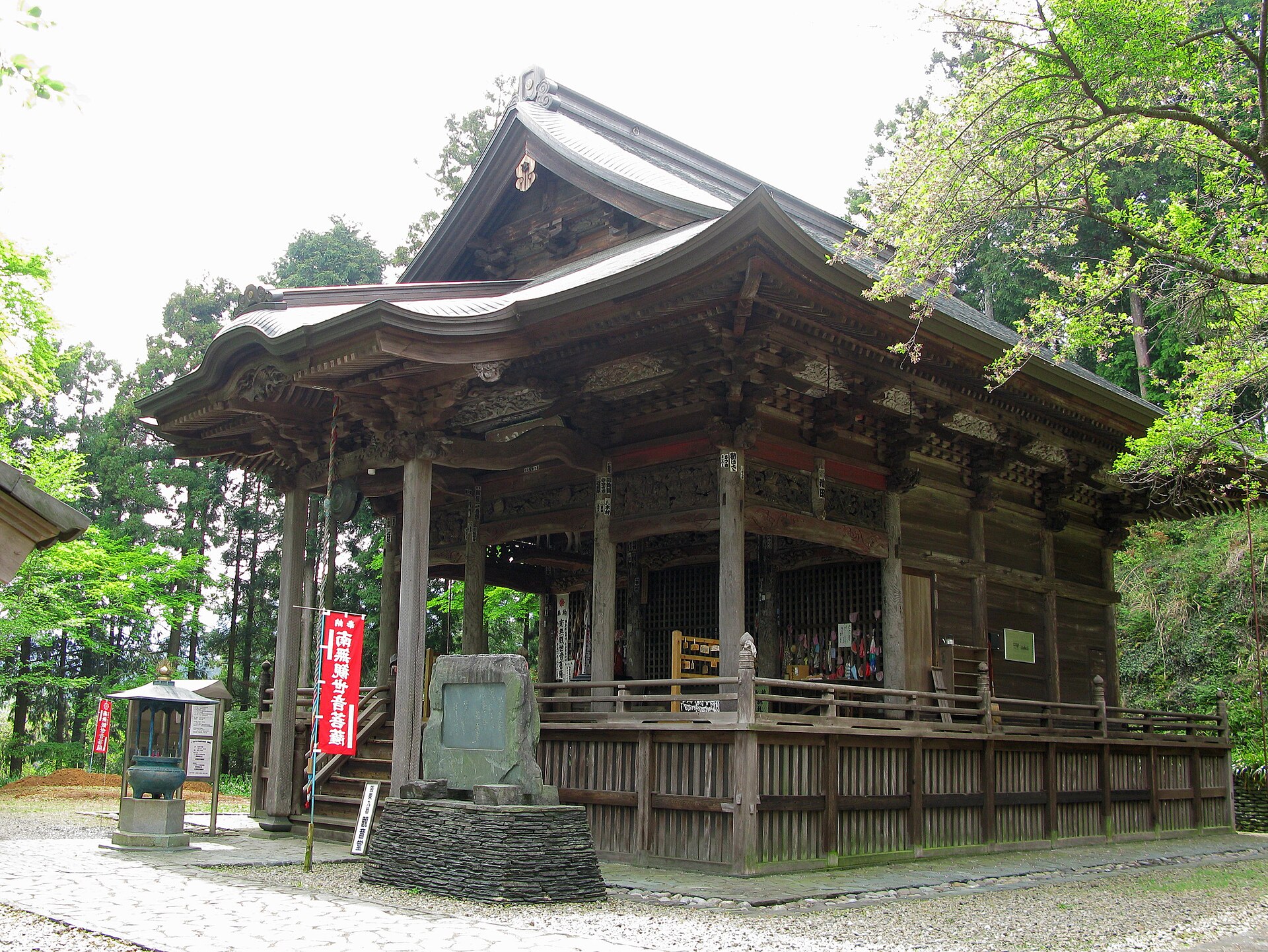
Only about an hour and a half from central Tokyo, the road climbs into cedar-covered hills and ends at a temple older than Kyoto itself. Few international visitors have heard of Jikoji, which is exactly why it is worth the trip.
One of the oldest temples in Saitama
According to temple tradition, Jikoji was founded in 673, when a monk from Kofuku-ji in Nara set up a hall for a Thousand-Armed Kannon on this mountain. Around a century later, a disciple of the famous Chinese monk Ganjin formally established the temple. It belongs to the Tendai school of Buddhism and is one of the Bando Sanjusankasho, a pilgrimage of 33 Kannon temples across eastern Japan.
In the Kamakura period, Jikoji was a powerful mountain monastery. It is said that Minamoto no Yoritomo, the first Kamakura shogun, prayed here for victory, and that the mountain once held around 75 monks’ lodgings. Little of that scale remains today, but walking up the stone paths between the old halls, it is easy to imagine.
What to see
- The Kannon Hall, the heart of the temple and a stop for Bando pilgrims.
- The treasure hall, which holds important Buddhist art and sutras. Some of the temple’s most valuable objects are kept at the Tokyo National Museum, and a full-size replica of one of its old structures is shown at the Saitama Prefectural Museum of History and Folklore.
- Old stone monuments and quiet forest paths around the temple, especially beautiful in fresh green and autumn colors.
- Hydrangeas in early summer, when the hillside path becomes a tunnel of blue and purple.
| Address | 386 Nishidaira, Tokigawa, Hiki District, Saitama |
|---|---|
| Grounds | Free to enter |
| Treasure hall | Around 300 yen for adults; open roughly 9:00–16:00 |
| Getting there | From Musashi-Ranzan Station (Tobu Tojo Line), take the Tokigawa town bus to Seseragi Bus Center (about 30 min), then change to the bus for Jikoji (about 9 min) |
Make a day of it
Combine Jikoji with a hike on the Tokigawa trekking course toward Mount Doudaira, a soak at one of Tokigawa’s hot springs, and a stop at the local farmers’ market for seasonal vegetables. If you have time, stay overnight at the Doudaira Observatory for some of the best stargazing near Tokyo.
Tip: buses to Jikoji are infrequent. Check the return timetable before you go, or travel by car.
Sources and further reading
- Mapple: Jikoji (Japanese)
- Wikipedia: Tokigawa, Saitama
- Saitama Prefecture: Hiki area sightseeing (Japanese)
Featured image: 京浜にけ at Japanese Wikipedia / Wikimedia Commons (CC BY-SA 3.0). Practical details such as prices, hours and schedules change often. Please check the official sources before you travel.