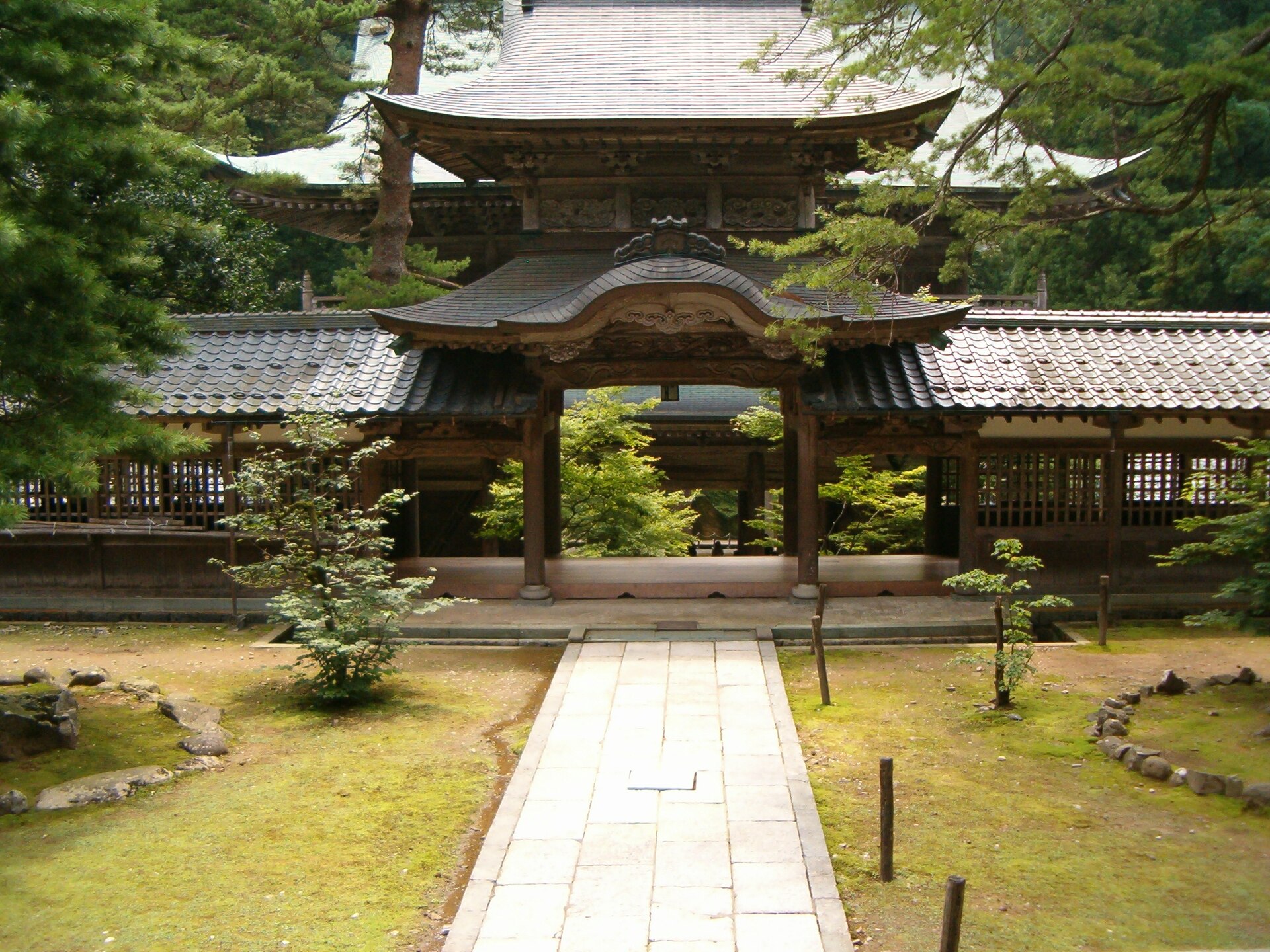
Founded in 1244, Eiheiji (“Temple of Eternal Peace”) is not a museum. Around a hundred young monks live and train here, following a daily routine that has barely changed in centuries.
The head temple of Soto Zen
Eiheiji was founded by the Zen master Dogen (1200–1253), who brought Soto Zen from China to Japan. Hidden in a forest of giant cedars in the mountains of Fukui Prefecture, the temple has around 70 buildings connected by covered corridors and wooden staircases. Monks polish these floors every day as part of their training.
Day visitors can walk through much of the complex, but the real Eiheiji is the rhythm of monastic life: zazen meditation, chanting, cleaning and silent meals.
Overnight Zen programs
Eiheiji has long offered overnight programs (known as sanro and sanzen) in which guests follow the monks’ schedule. Participants typically:
- Practice zazen (seated meditation) under the guidance of a monk.
- Join the early morning service, which begins before dawn.
- Eat shojin ryori in the monastic style, in complete silence and following strict etiquette.
- Sleep in communal rooms and use shared baths.
Important: because Eiheiji is an active training monastery, overnight places are very limited and the programs are sometimes suspended or offered only in Japanese. The temple has announced periods when the program is not available to international visitors. Always check the official website before planning your trip, and apply well in advance (at least a month ahead is usually required).
An easier alternative: Hakujukan
If you cannot get a place in the monastery itself, Hakujukan is a modern lodging in front of the temple promoted by Eiheiji as part of its “Zen village” project. Guests can join some of the temple’s activities, such as the early morning service, and staff trained by Eiheiji monks guide beginners through zazen. It is a comfortable way to experience Zen while still waking up before dawn.
Etiquette for visitors
- Dress modestly and speak quietly. This is a place of practice.
- Photography is restricted in some areas. Follow the signs and the monks’ instructions.
- Do not expect a hotel experience inside the monastery. The point is discipline, not comfort.
Getting there
From JR Fukui Station, take the Echizen Railway to Eiheiji-guchi and change to a bus, or take a direct express bus from Fukui Station (about 30 minutes). Fukui is now on the Hokuriku Shinkansen, making it easier to reach from Tokyo and Kanazawa.
Sources and further reading
- Daihonzan Eiheiji (official): Zen Practice
- Fukui Prefecture Tourism: Eiheiji
- Hakujukan
- Sotozen-net: Eiheiji for foreign visitors
Featured image: Supermidget / Wikimedia Commons (Public domain). Practical details such as prices, hours and schedules change often. Please check the official sources before you travel.