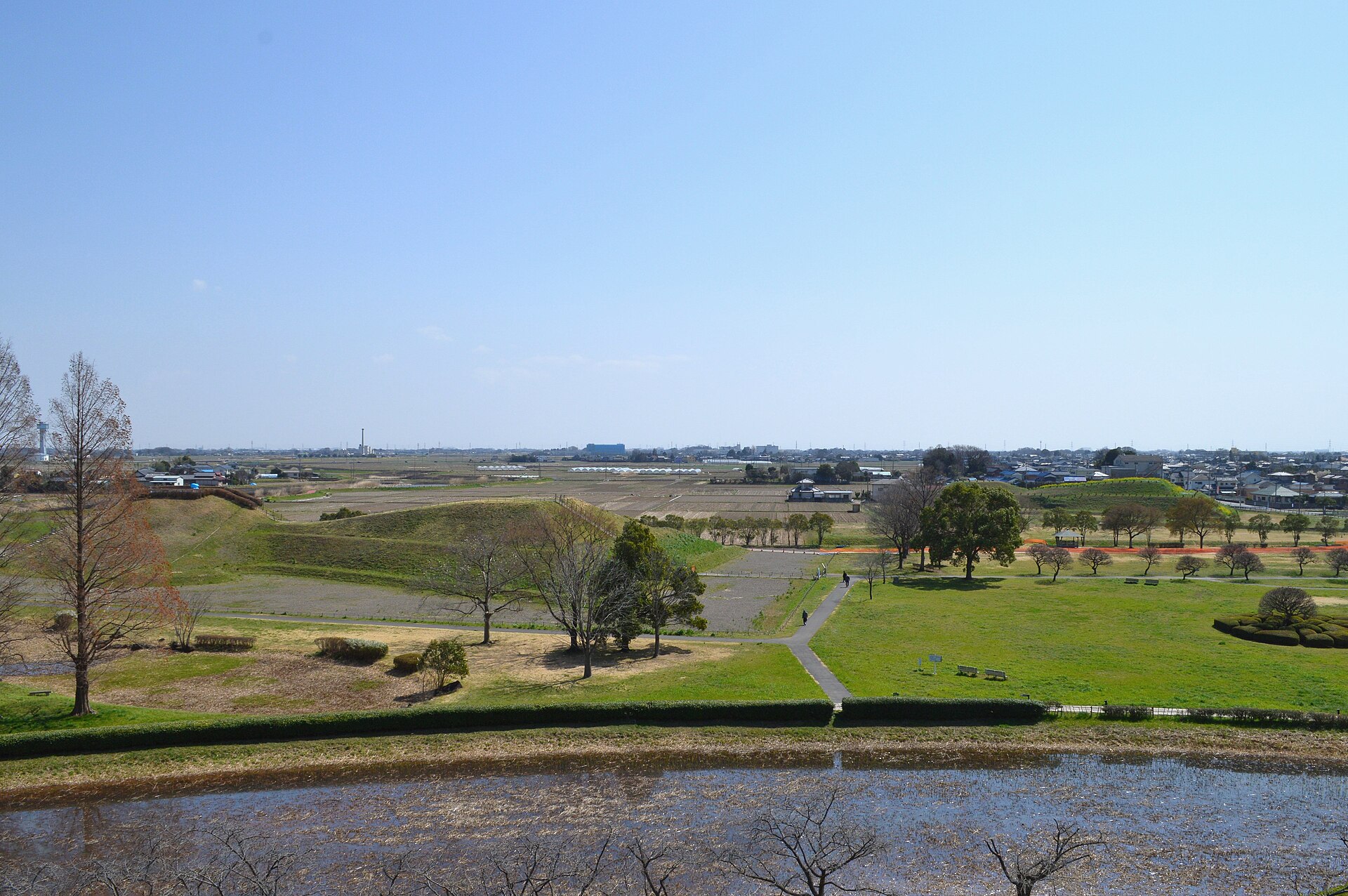
Japan’s ancient keyhole-shaped tombs are usually fenced off and covered in forest. At Sakitama Kofun Park in northern Saitama, you can walk right up onto them.
Where Saitama got its name
The Sakitama Kofun Cluster in Gyoda is a group of nine large burial mounds (kofun) built between the second half of the 5th century and the early 7th century for powerful local rulers. The area’s old name, Sakitama, later became “Saitama”, the name of the whole prefecture.
The cluster was designated a National Historic Site in 1938 and upgraded to a Special National Historic Site in 2020, a rank given only to sites of the highest value.
The mounds
- Maruhakayama Kofun: about 105 meters across and 19 meters high, one of the largest round burial mounds in Japan. Climb the steps for a view over the flat rice country.
- Inariyama Kofun: a keyhole-shaped mound about 120 meters long, which you can also climb.
- Futagoyama Kofun: the largest keyhole-shaped mound in the cluster, at about 138 meters.
The Inariyama Sword
In 1968, excavations at Inariyama Kofun found an iron sword. Years later, X-ray examination revealed 115 characters inlaid in gold on its blade. The inscription names a local warrior who served a great king, believed to be Emperor Yuryaku, making it one of the most important written records of 5th-century Japan. The sword and other grave goods were designated National Treasures in 1983.
You can see the sword at the Saitama Prefectural Museum of the Sakitama Ancient Burial Mounds in the park, along with mirrors, armor, horse fittings and haniwa clay figures. At the nearby Haniwa no Yakata, you can try making your own haniwa.
| Address | 4834 Sakitama, Gyoda, Saitama |
|---|---|
| Museum closed | Mondays (or the next day if Monday is a holiday) and over New Year |
| Access | JR Takasaki Line to Fukiage or Gyoda Station, then city bus; or about 40 min by car from the Higashi-Matsuyama IC |
Make a day of it
Gyoda is perfect for a full day: the kofun in the morning, the tabi warehouses and Oshi Castle at lunchtime, and the ancient lotus park and rice paddy art in the afternoon (in season).
Sources and further reading
- Chokotabi Saitama: Sakitama Kofun Cluster
- Google Arts & Culture: The Story of the Inariyama Sword
- Japan-guide.com: A Stroll Through Gyoda
Featured image: Saigen Jiro / Wikimedia Commons (CC0). Practical details such as prices, hours and schedules change often. Please check the official sources before you travel.