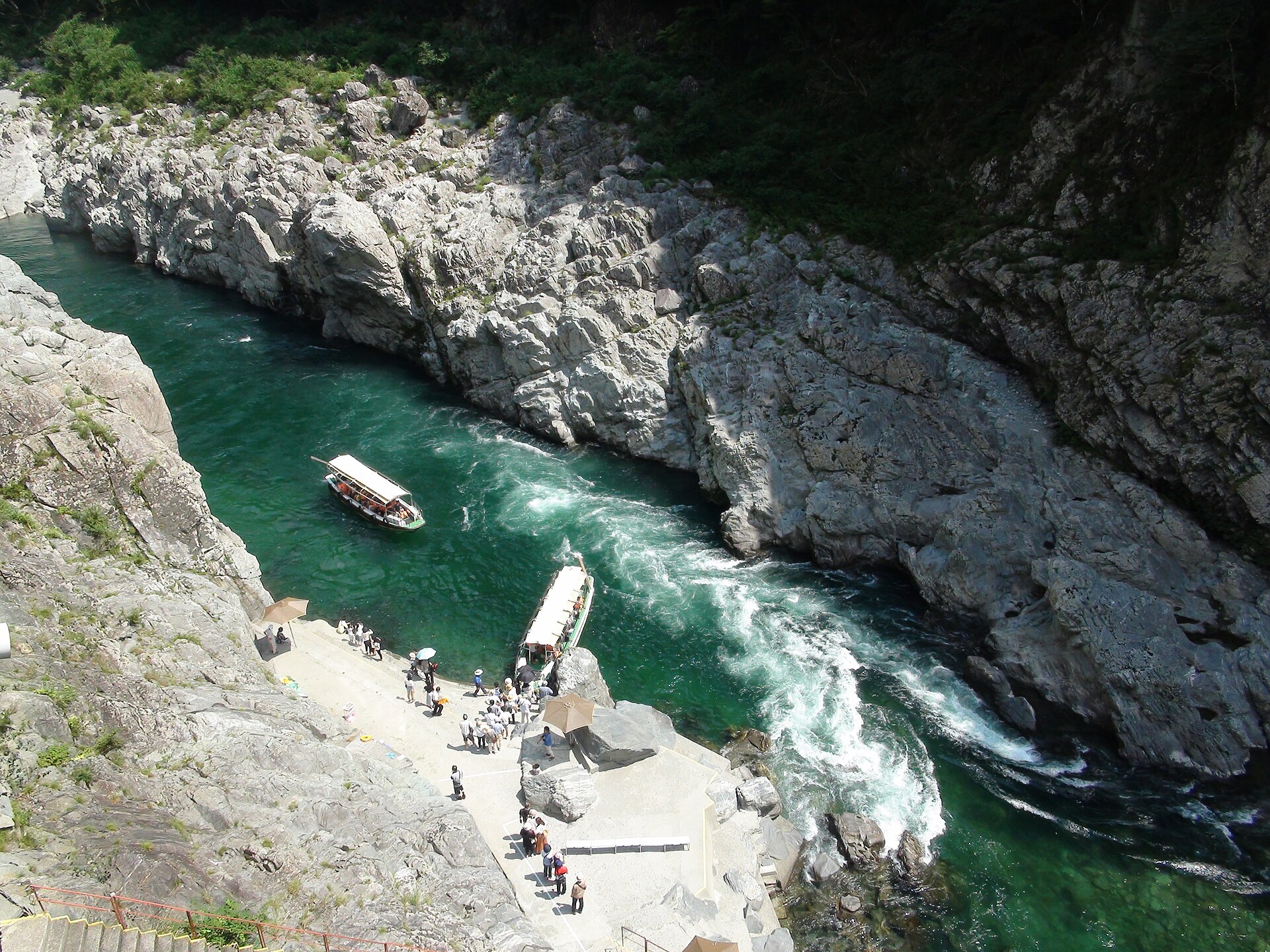
Ask Japan’s rafting guides where the best whitewater in the country is and most of them will point to the same place: the Yoshino River as it cuts through the Oboke and Koboke gorges in the heart of Shikoku.
The river
The Yoshino is the longest river on Shikoku, at about 194 kilometers from Kochi Prefecture to the sea in Tokushima. In its middle section the river has carved a deep gorge through the Shikoku Mountains, creating clear, jade-green water that tumbles over a long series of rapids. The names Oboke and Koboke are often explained as “big dangerous steps” and “little dangerous steps”, which tells you something about the terrain.
The river is rated up to Class 4, and the area hosted the World Rafting Championship in 2017. Despite its reputation, there are also gentler sections, so beginners and families can join too.
Tour options
- Half-day courses usually run the Oboke section, with rapids up to around Class 3. This is the best choice for first-timers.
- Full-day courses include the more demanding Koboke section, with rapids up to Class 4.
- Many outfitters add cliff jumps from the white rocks and swimming in calm pools between the rapids.
Several operators run tours from the Oboke area, and some have English-speaking guides. Equipment such as wetsuits, helmets and life jackets is normally included.
When to go
The rafting season usually runs from around March to November. Summer (July to September) is the most popular time thanks to warm water, while spring snowmelt and heavy rain can make the river faster and more exciting. Water levels change with the weather, and tours may be cancelled or rerouted after heavy rain.
If rafting is not your thing
You can still enjoy the gorge from the water on the Oboke Gorge sightseeing boat, a calm 30-minute cruise past striking rock formations. In spring, hundreds of carp streamers (koinobori) are strung across the gorge.
Getting there
- JR Oboke Station on the Dosan Line is the main gateway. Limited express trains connect it with Okayama, Kochi and Awa-Ikeda.
- By car, take the Ikawa-Ikeda Interchange and follow National Route 32 along the river.
- Stay nearby and combine your trip with the Iya Valley vine bridges and Nagoro.
Sources and further reading
- JNTO: Rafting on the Yoshino River
- JNTO: An exciting adventure on the Yoshino River
- Tokushima Prefecture: Oboke and Koboke
- Shikoku Tourism: Oboke-Koboke Rafting
Featured image: さかおり / Wikimedia Commons (CC BY-SA 4.0). Practical details such as prices, hours and schedules change often. Please check the official sources before you travel.