Category: Hidden Gems

Offbeat, little-known places in Japan that most travel guides skip.

  • Hoshitoge Rice Terraces: Japan’s Mirror Fields in Snow Country

    Hoshitoge Rice Terraces: Japan’s Mirror Fields in Snow Country

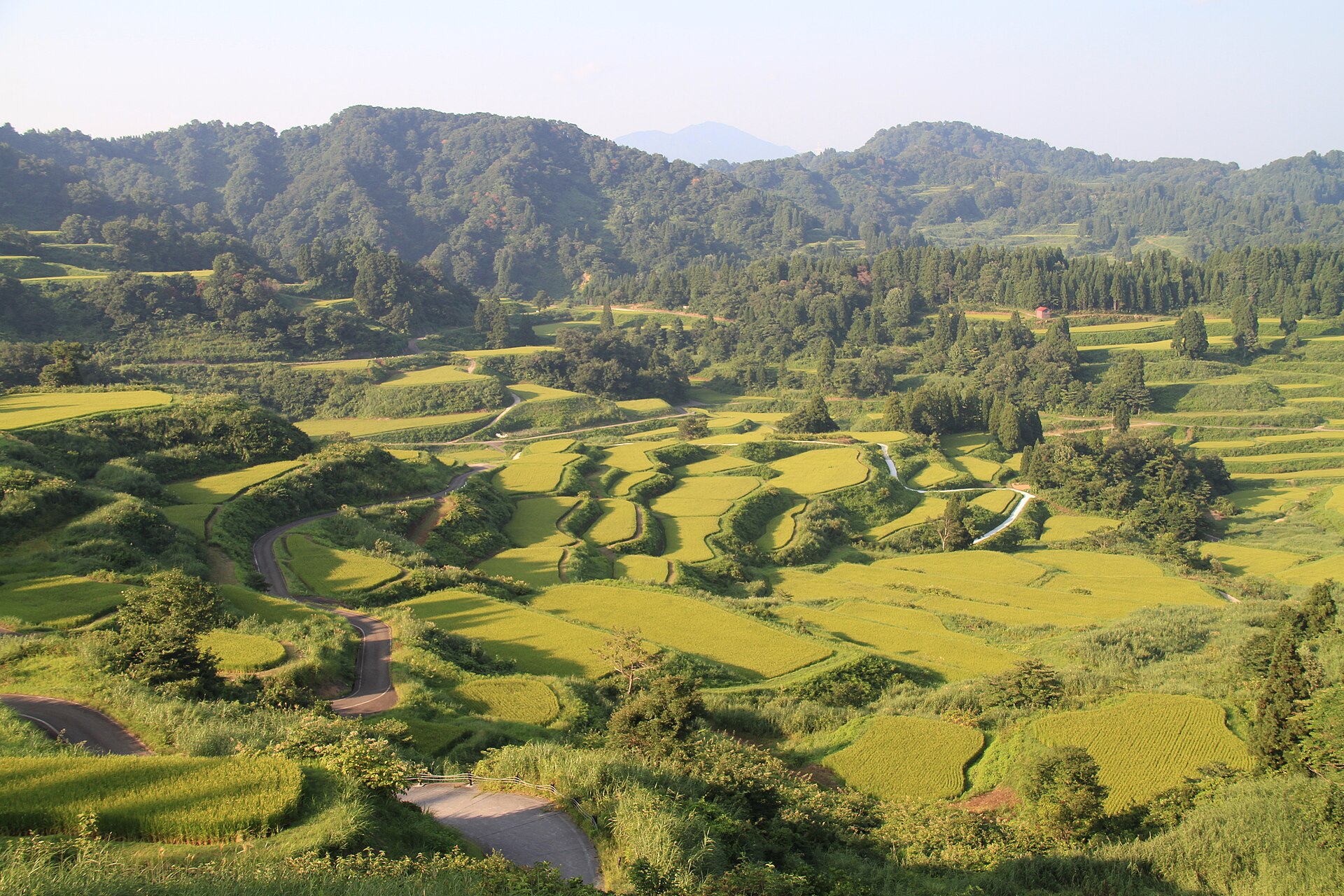
    Niigata is famous for producing some of Japan’s best rice, and nowhere shows the bond between people and land more beautifully than the Hoshitoge Rice Terraces.

    A landscape made by snow and people

    Hoshitoge is in the Matsudai area of Tokamachi City, deep in “snow country”, where winters bring some of the heaviest snowfall in the world. Over generations, local farmers carved around 200 rice paddies into the steep slopes. The water that fills them comes not from rivers but from rain, groundwater and snowmelt, slowly released by beech forests at the top of the mountain.

    The terraces are selected as one of “Japan’s 100 Most Beautiful Villages” and appeared in the opening titles of the NHK historical drama Tenchijin.

    When to visit

    • Spring (after the snow melts until June): the flooded paddies become a “water mirror”, reflecting the sky, clouds and sunrise.
    • Summer: bright green rice and the sound of frogs and dragonflies.
    • Autumn (late October to November): after the harvest the fields are flooded again, and mornings often bring a sea of clouds.
    • Winter: a silent world of snow. Cars cannot reach the terraces because the road is not cleared.

    Sunrise is the most popular time for photographers. On a calm morning you may find dozens of tripods lined up at the viewpoint. Arrive early and be patient.

    Respect the farmers

    The terraces are on private land and are still worked by local farmers. View them from the road and the designated parking area, never walk on the paddy ridges, and keep drones on the ground unless you have permission. Some terraces in Tokamachi are supported by a shared ownership system, in which people across Japan pay a yearly fee to help keep the paddies farmed and receive rice in return.

    Stay longer: rural Tokamachi

    The surrounding area is full of small farming hamlets, guesthouses and old farmhouses converted into inns. Tokamachi is also the main venue of the Echigo-Tsumari Art Triennale, held every three years, when contemporary art installations appear in fields, schools and empty houses. A stay in a local guesthouse lets you see the terraces at dawn without a long drive.

    Getting there

    • From Tokyo, take the Joetsu Shinkansen to Echigo-Yuzawa (about 80 minutes), then the Hokuhoku Line to Matsudai Station.
    • From Matsudai Station, the terraces are about 20 minutes by taxi or rental car.
    • By car, allow about one hour from the Muikamachi Interchange (Kan-Etsu Expressway).

    Sources and further reading

    Featured image: Fumihiko Ueno / Wikimedia Commons (CC BY 3.0). Practical details such as prices, hours and schedules change often. Please check the official sources before you travel.
  • Nagoro: The Scarecrow Village Where Dolls Outnumber People

    Nagoro: The Scarecrow Village Where Dolls Outnumber People

    Drive deep into the Iya Valley and you may notice people waiting at a bus stop, chatting on a bench or working in a field. Look again: they are dolls. Welcome to Nagoro, known in Japanese as Kakashi no Sato, the scarecrow village.

    How a village of dolls began

    Nagoro is a tiny hamlet in the city of Miyoshi, Tokushima Prefecture. Like many villages in rural Japan, its population has shrunk dramatically over the decades, and only a few dozen people remain.

    In the early 2000s, local resident Tsukimi Ayano returned to Nagoro after many years living in Osaka. She made a scarecrow in the likeness of her father to keep birds away from the seeds in her vegetable patch. Neighbours liked it and asked for their own, and she kept going. She began to recreate former residents who had died or moved away, placing them where they used to spend their days.

    Today, several hundred figures are spread around the village. Reports put the number at around 350 or more, many times the number of human residents.

    What you will see

    • Dolls fishing by the river, resting by the road and gathered at the bus stop.
    • The former elementary school, which closed when the last pupils left. Its classroom is filled with doll pupils and teachers, a scene that is both charming and sad.
    • Life-sized figures of farmers, construction workers and elderly couples, each with its own face and clothes.

    Some visitors find the place unsettling, especially at dusk. Others find it heartwarming. Either way, Nagoro is a striking picture of what depopulation means for rural Japan, and of one person refusing to let her home be forgotten.

    Visiting respectfully

    • Nagoro is a real community, not a theme park. Keep your voice down, do not enter private land, and never move or touch the dolls.
    • There are almost no shops or restaurants, so bring water and snacks.
    • In winter the mountain roads can be icy. Check the weather before you go.

    Getting there

    Nagoro is in Oku-Iya (Inner Iya), roughly one hour by car beyond the Iya Kazurabashi vine bridge, on the road toward Mount Tsurugi. Public transport is extremely limited, so a rental car from Oboke or Awa-Ikeda is the practical choice. Combine your visit with the Oku-Iya double vine bridges, which are on the way.

    Sources and further reading

    Featured image: na0905 / Wikimedia Commons (CC BY 2.0). Practical details such as prices, hours and schedules change often. Please check the official sources before you travel.

  • Crossing the Vine Bridges of the Iya Valley, Shikoku

    Crossing the Vine Bridges of the Iya Valley, Shikoku

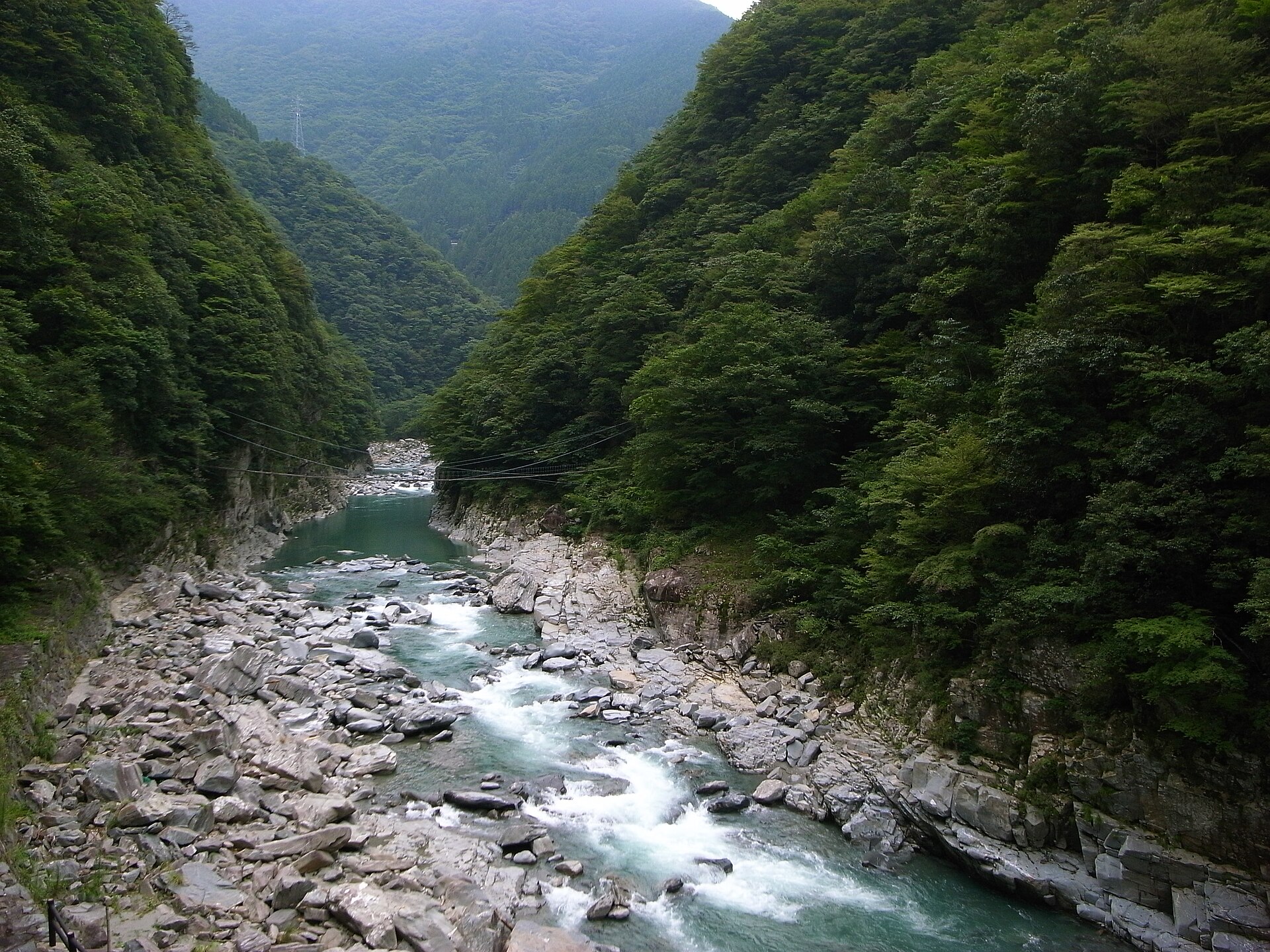
    Most visitors to Japan never set foot on Shikoku, and few who do make it as far as the Iya Valley. That is exactly why it is worth the effort: steep, forested slopes, farmhouses clinging to the hillsides, and bridges made of mountain vines that creak under your feet.

    A valley of hideaways

    The Iya Valley follows the Iya River through the western part of Tokushima Prefecture. For centuries it was one of the most isolated places in Japan, and local legend says that warriors of the defeated Heike clan fled here after losing the Genpei War in the 12th century. Whether or not the story is true, the valley still feels like a place where people came to disappear.

    The valley is usually divided into two parts. Nishi-Iya (West Iya) is easier to reach and has the best-known bridge, hot spring hotels and a few restaurants. Oku-Iya (Inner Iya, also called Higashi-Iya) lies much further up the valley and is very hard to reach without a car.

    Iya Kazurabashi: the classic crossing

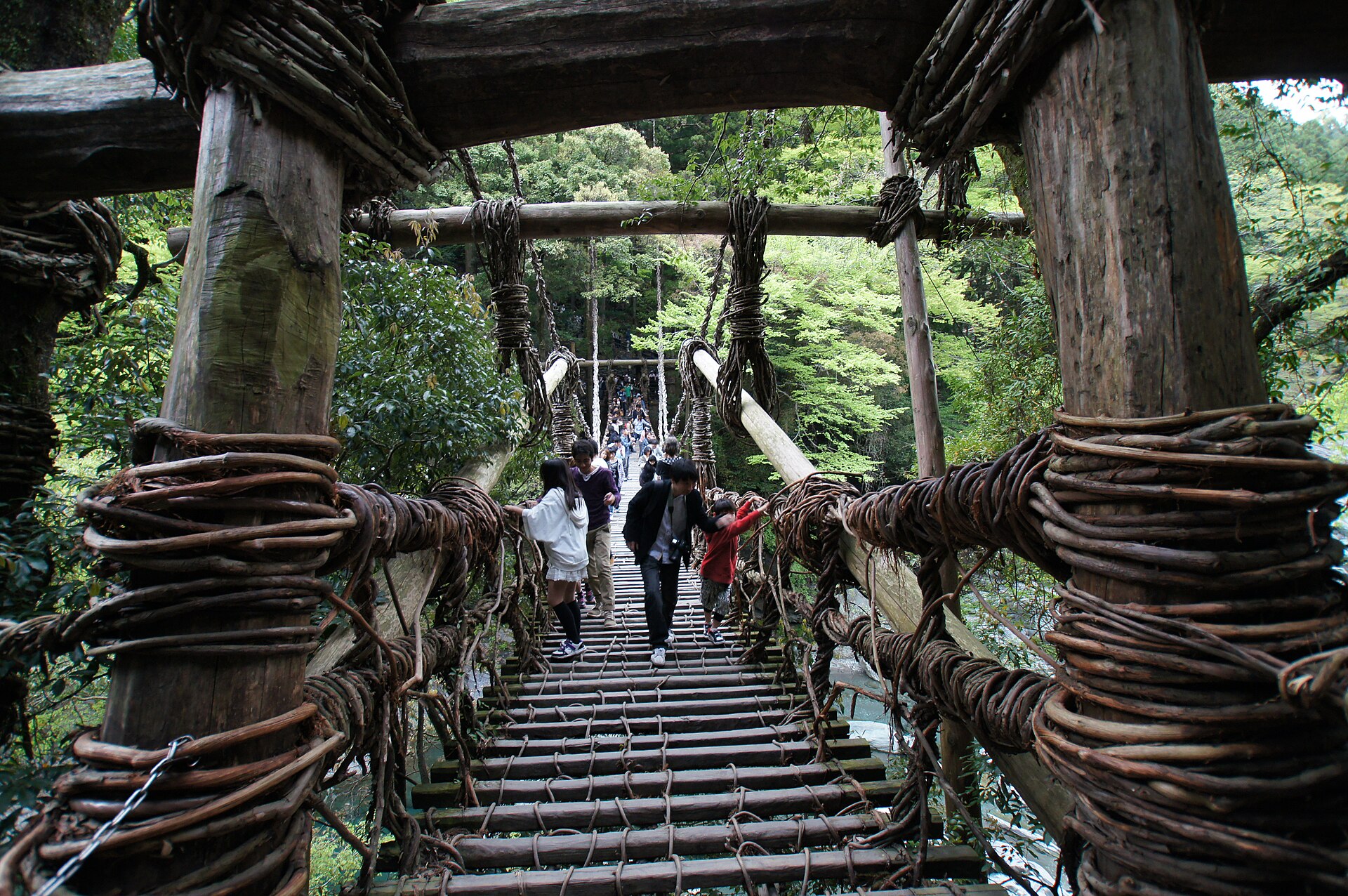
    In the past, around 13 vine bridges spanned the river and were a lifeline for villagers moving people and goods across the gorge. Only three remain today. The largest, the Iya Kazurabashi, is about 45 meters long and hangs roughly 15 meters above the water. It is a designated Important Tangible Folk Cultural Property of Japan.

    The bridge is woven from hardy kiwi-family vines. For safety it is now reinforced with hidden steel cables, and the vines are replaced every few years, which can close the bridge for some weeks in winter. Walking across is a slightly nerve-racking experience: the gaps between the wooden slats are wide, the whole structure sways, and you can see straight down to the jade-green river.

    LocationZentoku, Nishi-Iya, Miyoshi City, Tokushima
    Hours (approx.)8:00–17:00 most of the year; longer hours in spring and summer
    AdmissionAround 550 yen for adults
    Night viewThe bridge is lit up in the evening, but you cannot cross it at night

    Oku-Iya Double Vine Bridges

    If you have a car, keep driving east for about an hour along narrow mountain roads to reach the Oku-Iya Niju Kazurabashi, a pair of vine bridges known locally as the “husband and wife” bridges. They are a little smaller than the main bridge but far quieter, and they hang over a beautiful stretch of clear river.

    Next to the bridges you can also try the yaen, a hand-pulled cable car: you sit in a wooden box and haul yourself across the gorge with a rope. It is harder work than it looks. The Oku-Iya bridges are closed in winter (roughly December to March), and the autumn leaves here usually turn earlier than in the rest of the valley, around late October to early November.

    Getting there

    • By bus: local buses run from JR Awa-Ikeda Station (about 60–70 minutes) and from JR Oboke Station (about 25–30 minutes) to the Iya Kazurabashi area. Services are infrequent, so check the timetable in advance.
    • By car: the main bridge is about 70 minutes from the Ikawa-Ikeda Interchange. A rental car is strongly recommended if you want to see Oku-Iya.
    • Combine with: Oboke Gorge rafting and the scarecrow village of Nagoro, both in the same area.

    Tips for your visit

    • Wear shoes with a good grip and keep phones and cameras on a strap. Things dropped through the bridge are gone for good.
    • Come early in the morning to cross the main bridge before the tour buses arrive.
    • Stay overnight in the valley. A night in a renovated farmhouse or a hot spring inn is what makes Iya special.

    Sources and further reading

    Featured image: ume-y / Wikimedia Commons (CC BY 2.0). Practical details such as prices, hours and schedules change often. Please check the official sources before you travel.