Blog

  • Sleeping Under the Stars at Doudaira Observatory, Tokigawa

    Sleeping Under the Stars at Doudaira Observatory, Tokigawa

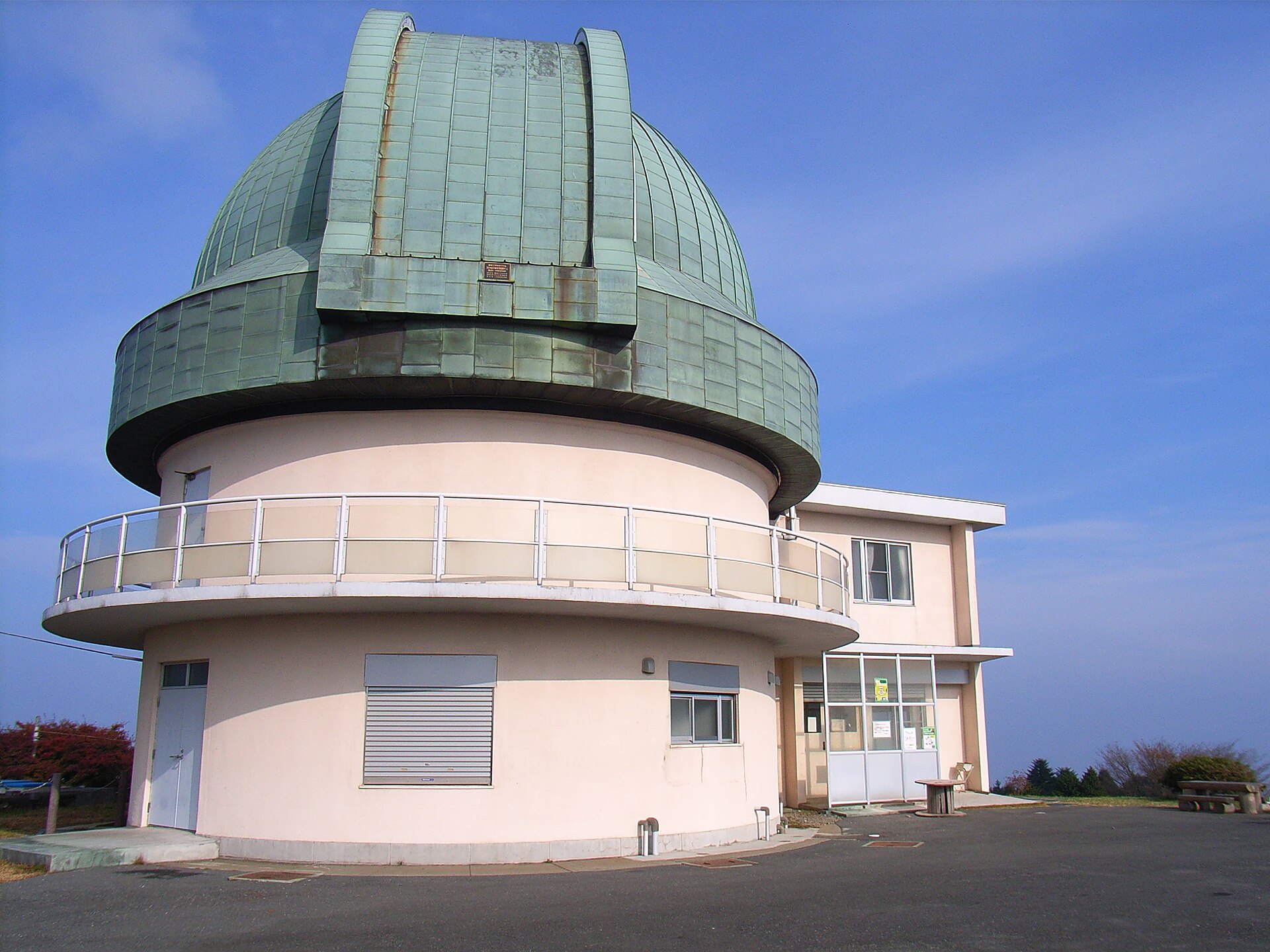
    From 1962, astronomers chose this mountaintop in Saitama for its dark skies. Today, anyone can spend the night here, with a view over the whole Kanto Plain and the Milky Way overhead.

    From national observatory to stargazing retreat

    Doudaira Observatory sits on the summit of Mount Doudaira (876 m), on the border of Tokigawa, Ogawa and Higashichichibu. It opened in 1962 as an observing station of the Tokyo Astronomical Observatory of the University of Tokyo, later part of the National Astronomical Observatory of Japan. For about 40 years it was used for research, until it closed as an observatory in 2000.

    The town took over the site and reopened it in 2005 as the Doudaira Observatory “Hoshi to Midori no Sozo Center” (Star and Green Creation Center), a place for stargazing, camping and nature activities.

    Where you can sleep

    • A guest room inside the old observation dome.
    • Log houses and bungalows with simple facilities.
    • Mongolian-style tents (ger) for families and groups.
    • Tent sites for your own gear.

    Day visitors can also use the site for picnics and barbecues. The facility usually operates from March to December.

    Stargazing nights

    Stargazing sessions using the 91 cm reflecting telescope, the largest in Saitama Prefecture, are held about twice a month in season (reservation and a fee are required). Depending on the season you may see Saturn’s rings, star clusters or distant nebulae. On a clear night the view from the summit is just as memorable: the lights of Tokyo and Saitama spread out below like a sea of jewels.

    Getting there

    • By car: about 27 km from the Higashi-Matsuyama Interchange on the Kan-Etsu Expressway, via the Okumusashi Green Line and Shiraishi Pass.
    • On foot: the Tokigawa trekking course climbs from the Jikoji area (around 3 hours 40 minutes). Shorter routes start from nearby passes.

    Tip: even in summer, nights on the summit are cool. Bring warm clothes, and book well in advance for weekends and meteor showers.

    Sources and further reading

    Featured image: icer1212 / Wikimedia Commons (CC BY-SA 3.0). Practical details such as prices, hours and schedules change often. Please check the official sources before you travel.
  • Jikoji: A 1,300-Year-Old Mountain Temple in Tokigawa, Saitama

    Jikoji: A 1,300-Year-Old Mountain Temple in Tokigawa, Saitama

    Only about an hour and a half from central Tokyo, the road climbs into cedar-covered hills and ends at a temple older than Kyoto itself. Few international visitors have heard of Jikoji, which is exactly why it is worth the trip.

    One of the oldest temples in Saitama

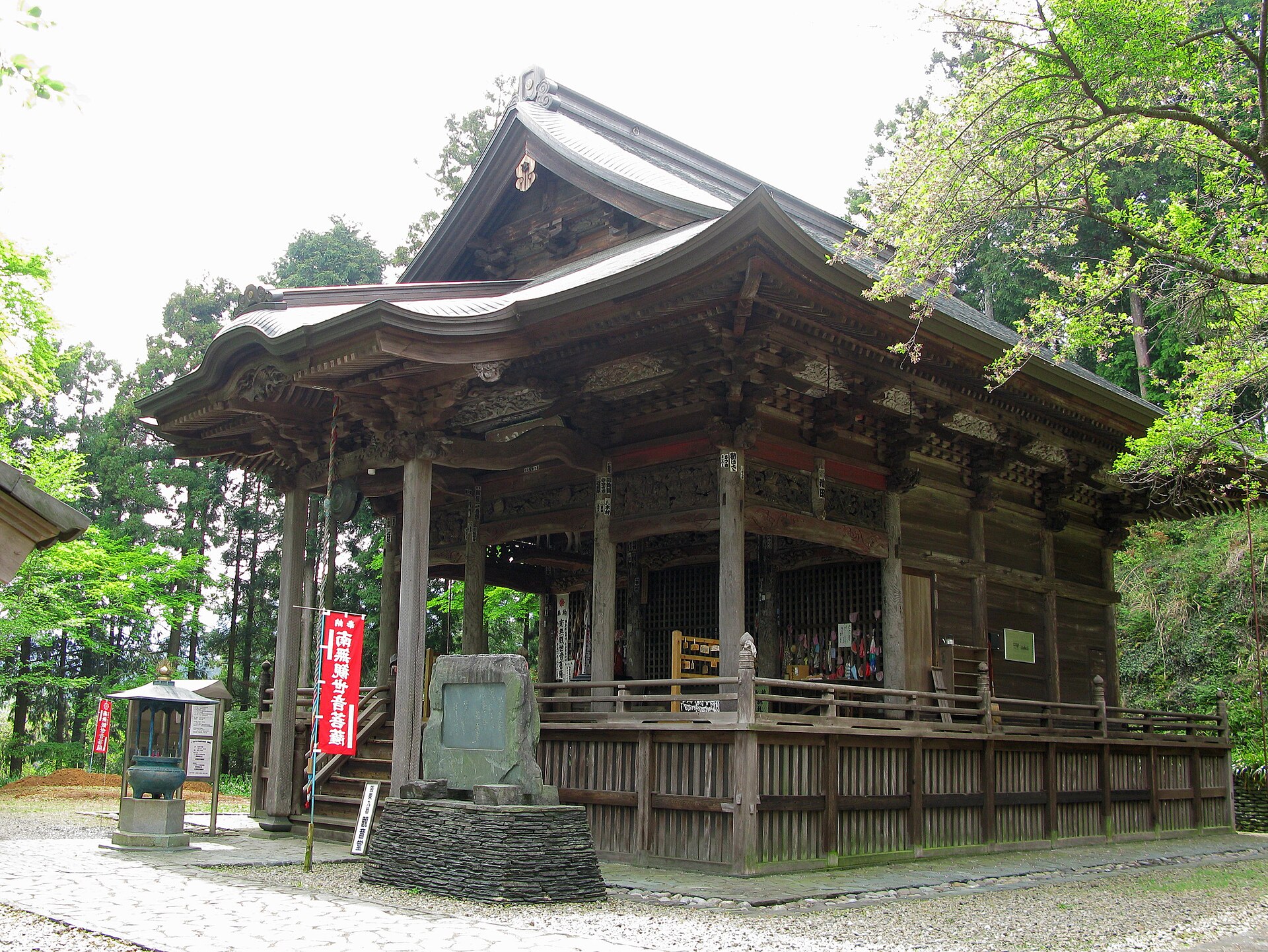
    According to temple tradition, Jikoji was founded in 673, when a monk from Kofuku-ji in Nara set up a hall for a Thousand-Armed Kannon on this mountain. Around a century later, a disciple of the famous Chinese monk Ganjin formally established the temple. It belongs to the Tendai school of Buddhism and is one of the Bando Sanjusankasho, a pilgrimage of 33 Kannon temples across eastern Japan.

    In the Kamakura period, Jikoji was a powerful mountain monastery. It is said that Minamoto no Yoritomo, the first Kamakura shogun, prayed here for victory, and that the mountain once held around 75 monks’ lodgings. Little of that scale remains today, but walking up the stone paths between the old halls, it is easy to imagine.

    What to see

    • The Kannon Hall, the heart of the temple and a stop for Bando pilgrims.
    • The treasure hall, which holds important Buddhist art and sutras. Some of the temple’s most valuable objects are kept at the Tokyo National Museum, and a full-size replica of one of its old structures is shown at the Saitama Prefectural Museum of History and Folklore.
    • Old stone monuments and quiet forest paths around the temple, especially beautiful in fresh green and autumn colors.
    • Hydrangeas in early summer, when the hillside path becomes a tunnel of blue and purple.
    Address386 Nishidaira, Tokigawa, Hiki District, Saitama
    GroundsFree to enter
    Treasure hallAround 300 yen for adults; open roughly 9:00–16:00
    Getting thereFrom Musashi-Ranzan Station (Tobu Tojo Line), take the Tokigawa town bus to Seseragi Bus Center (about 30 min), then change to the bus for Jikoji (about 9 min)

    Make a day of it

    Combine Jikoji with a hike on the Tokigawa trekking course toward Mount Doudaira, a soak at one of Tokigawa’s hot springs, and a stop at the local farmers’ market for seasonal vegetables. If you have time, stay overnight at the Doudaira Observatory for some of the best stargazing near Tokyo.

    Tip: buses to Jikoji are infrequent. Check the return timetable before you go, or travel by car.

    Sources and further reading

    Featured image: 京浜にけ at Japanese Wikipedia / Wikimedia Commons (CC BY-SA 3.0). Practical details such as prices, hours and schedules change often. Please check the official sources before you travel.
  • Takachiho Yokagura: All-Night Sacred Dances in the Land of Myths

    Takachiho Yokagura: All-Night Sacred Dances in the Land of Myths

    In the mountains of northern Miyazaki, winter nights are filled with flutes, drums and masked dancers telling the oldest stories in Japan. This is Takachiho yokagura, night kagura.

    Where the sun goddess hid

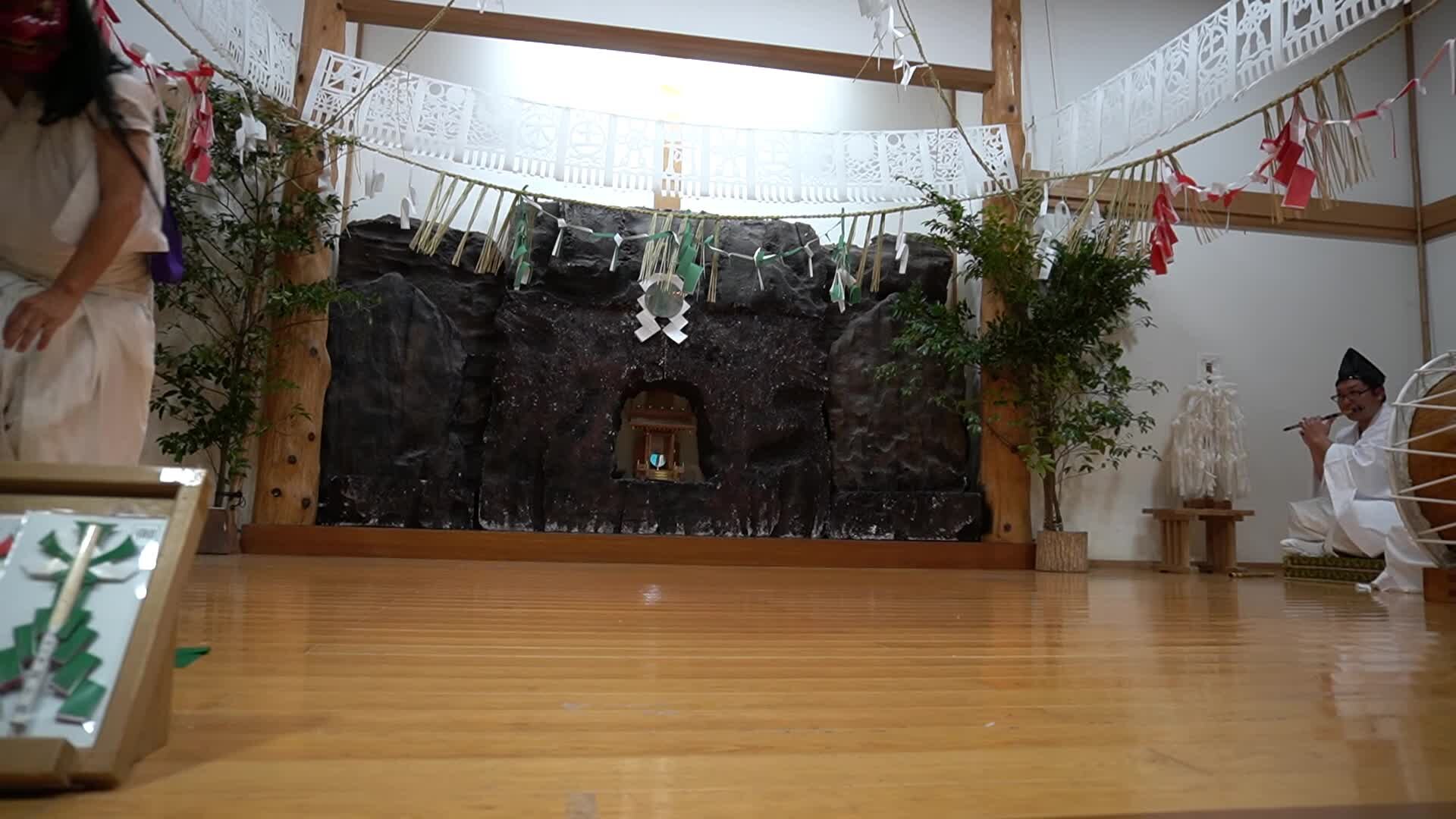
    Takachiho is closely linked to Japanese mythology. According to legend, the sun goddess Amaterasu hid in a cave here, plunging the world into darkness. The other gods gathered outside, and the goddess Ame no Uzume performed a wild, comic dance. The laughter made Amaterasu curious; she peeked out, and the strong god Tajikarao pulled the rock door open, returning light to the world.

    That dance is said to be the origin of kagura, the ritual music and dance performed for Shinto gods and considered one of Japan’s oldest performing arts.

    The real thing: all-night yokagura

    Takachiho yokagura is designated an Important Intangible Folk Cultural Property of Japan. Each winter, from about mid-November to early February, local communities hold their own yokagura as part of the harvest festival. The gods are invited into a private home or community hall, called a kagura yado, and local performers dedicate all 33 dances one after another, from the evening until the next morning.

    Each community has its own schedule and its own version of the dances. Visitors are often welcome, but remember that this is a religious ritual and a community event: be quiet during the dances, follow local guidance, and consider bringing a small offering (hatsuho, such as a bottle of sake or an envelope) as local custom suggests. Ask the Takachiho tourist association for that season’s dates and etiquette.

    The easy option: Kagura at Takachiho Shrine

    If you cannot visit in winter, Takachiho Shrine holds a one-hour tourist performance in its Kagura Hall every night at 8:00 pm, all year round. Four of the 33 dances are shown, including the dances of Tajikarao and Ame no Uzume and the comic “Goshin-tai” dance of the creator gods Izanagi and Izanami. It is a lively, entertaining introduction even if you do not know the myths.

    More to see in Takachiho

    • Takachiho Gorge: basalt cliffs and the Manai Falls, best seen from a rowboat.
    • Amano Iwato Shrine: it faces the cave where Amaterasu is said to have hidden.
    • Amano Yasugawara: a cave where the gods are said to have met, filled with small stone piles left by visitors.

    Getting there

    Takachiho has no train station. Take a bus from Nobeoka (about 1 hour 20 minutes) or from Kumamoto (about 3 hours), or rent a car. Stay overnight so you can see the evening kagura and the gorge in the morning before the crowds.

    Sources and further reading

    Featured image: 鶉野隆央 / Wikimedia Commons (CC0). Practical details such as prices, hours and schedules change often. Please check the official sources before you travel.
  • The Nachi Fire Festival: Giant Torches Below Japan’s Tallest Waterfall

    The Nachi Fire Festival: Giant Torches Below Japan’s Tallest Waterfall

    For most of the year, the stone path between Kumano Nachi Taisha and Nachi Falls is a quiet place of cedar trees and birdsong. On July 14, it fills with smoke, chanting and torches weighing around 50 kilograms each.

    A festival of fire and water

    The Nachi Fire Festival takes place at Kumano Nachi Taisha Grand Shrine in Nachikatsuura, Wakayama Prefecture. Its official name is Nachi no Ogi Matsuri, the Fan Festival. It is the shrine’s main annual festival and is counted among Japan’s “Three Great Fire Festivals”.

    According to tradition, the deities of Kumano were first worshipped at Nachi Falls, which drops 133 meters and is the tallest single-drop waterfall in Japan. The shrine was later built halfway up the mountain. Once a year, the deities make a symbolic journey home to the waterfall.

    What happens on the day

    • In the morning, rituals and traditional performances such as dengaku dances are dedicated at the shrine.
    • The deities are transferred into twelve ogi mikoshi, tall, narrow portable shrines decorated with fans and mirrors that are said to represent the shape of the waterfall.
    • In the afternoon, the ogi mikoshi are carried down toward Hiro Shrine at the foot of the falls.
    • White-robed men carrying twelve giant torches of Japanese cypress climb the stairs to meet them. Swinging the blazing torches, they purify the path and the portable shrines with fire, while the crowd is showered in sparks and smoke.

    The meeting of fire and water, with flames dancing in front of the white falls, is one of the most dramatic sights in Japanese festival culture.

    Tips for watching

    • The festival is held every year on July 14, with the main fire ritual in the early afternoon. Check the shrine or Visit Wakayama for the exact schedule.
    • Arrive early. The best spots along the stone steps fill quickly, and some areas are roped off.
    • It is the height of summer: bring water, a hat and a towel, and be ready for heat and humidity.
    • Smoke and sparks fly. Wear clothes you do not mind getting dirty and keep a safe distance from the torches.

    Explore the Kumano area

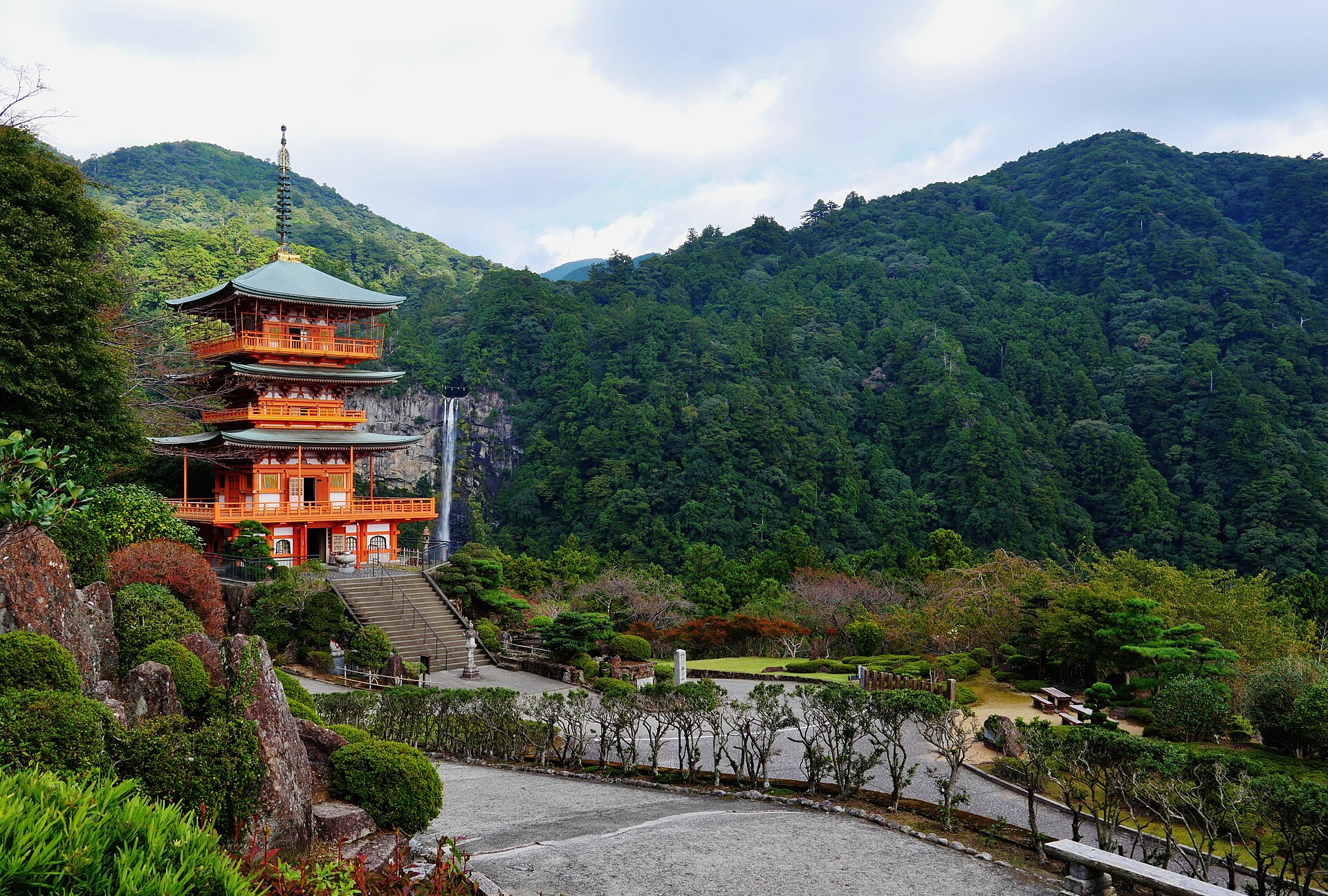
    Combine the festival with a walk on the Daimonzaka section of the Kumano Kodo pilgrimage trail, a visit to the bright red three-storied pagoda of Seiganto-ji with the waterfall behind it, and a night in the hot spring town of Katsuura or Yunomine.

    Getting there

    From JR Kii-Katsuura Station, take a Kumano Kotsu bus toward Nachisan and get off near the shrine parking area, then walk about 10 minutes. Expect extra traffic and crowds on festival day.

    Sources and further reading

    Featured image: Zairon / Wikimedia Commons (CC BY 4.0). Practical details such as prices, hours and schedules change often. Please check the official sources before you travel.
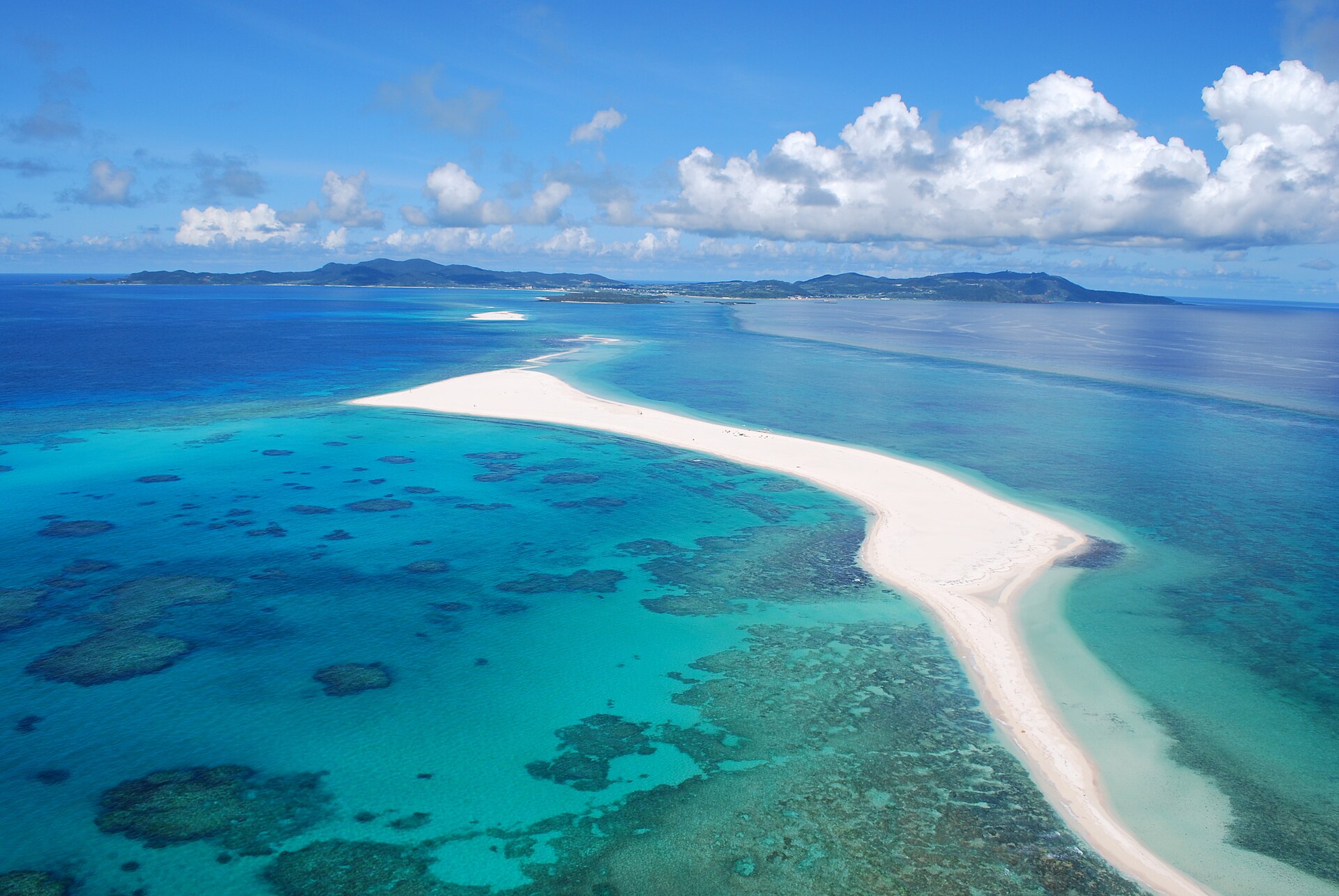
  • Hate no Hama: A Sandbar Island at the End of the Sea, Okinawa

    Hate no Hama: A Sandbar Island at the End of the Sea, Okinawa

    Look out of the window as your plane lands on Kumejima and you will see it: a thin line of brilliant white sand surrounded by turquoise sea. That line is Hate no Hama, whose name means “the beach at the end”.

    What is Hate no Hama?

    Hate no Hama is a chain of uninhabited sandbars about 5 kilometers east of Kumejima, a remote island about 100 kilometers west of Okinawa Island. It is made up of three sandbars, Mae no Hama, Naka no Hama and Hate no Hama, stretching about 7 kilometers in total. They are made entirely of sand and coral fragments, with no trees, no buildings and no shade.

    The water is extremely clear and shallow, and the beach is often called one of the most beautiful in East Asia. It even appeared in a commercial for Google.

    How to visit

    You cannot reach Hate no Hama on your own. Visitors join a boat tour run by local operators from the ports of Kumejima. The boat ride takes roughly 15 to 30 minutes. Popular options include:

    • Half-day tours with about 1 to 1.5 hours on the sandbar.
    • Glass-bottom boat tours that let you see coral and fish on the way.
    • Snorkeling tours, where you may spot clownfish and, with luck, sea turtles.
    • Full-day tours with lunch and more time on the beach.

    Tours usually include the boat fare and basic facilities, such as a simple toilet and shaded rest area on the sandbar. Prices start at a few thousand yen.

    Tips

    • There is no natural shade at all. Bring reef-safe sunscreen, a hat, sunglasses and a rash guard.
    • Bring plenty of drinking water.
    • Calm, sunny days between April and October are best for swimming and snorkeling. In winter, tours still run but time on the sandbar may be shorter.
    • Tides and wind decide everything. Tours can be cancelled at short notice in bad weather.
    • Take only photos: do not take sand or coral home.

    Getting to Kumejima

    Kumejima is about 35 minutes by plane from Naha Airport on Okinawa Island, or around three hours by ferry from Tomari Port in Naha. In summer there are also some direct flights from Tokyo Haneda. Stay at least one night to enjoy the island’s quiet beaches, its unusual rock formations and its laid-back pace.

    Sources and further reading

    Featured image: Kumejima93_OKINAWA / Wikimedia Commons (CC BY 4.0). Practical details such as prices, hours and schedules change often. Please check the official sources before you travel.
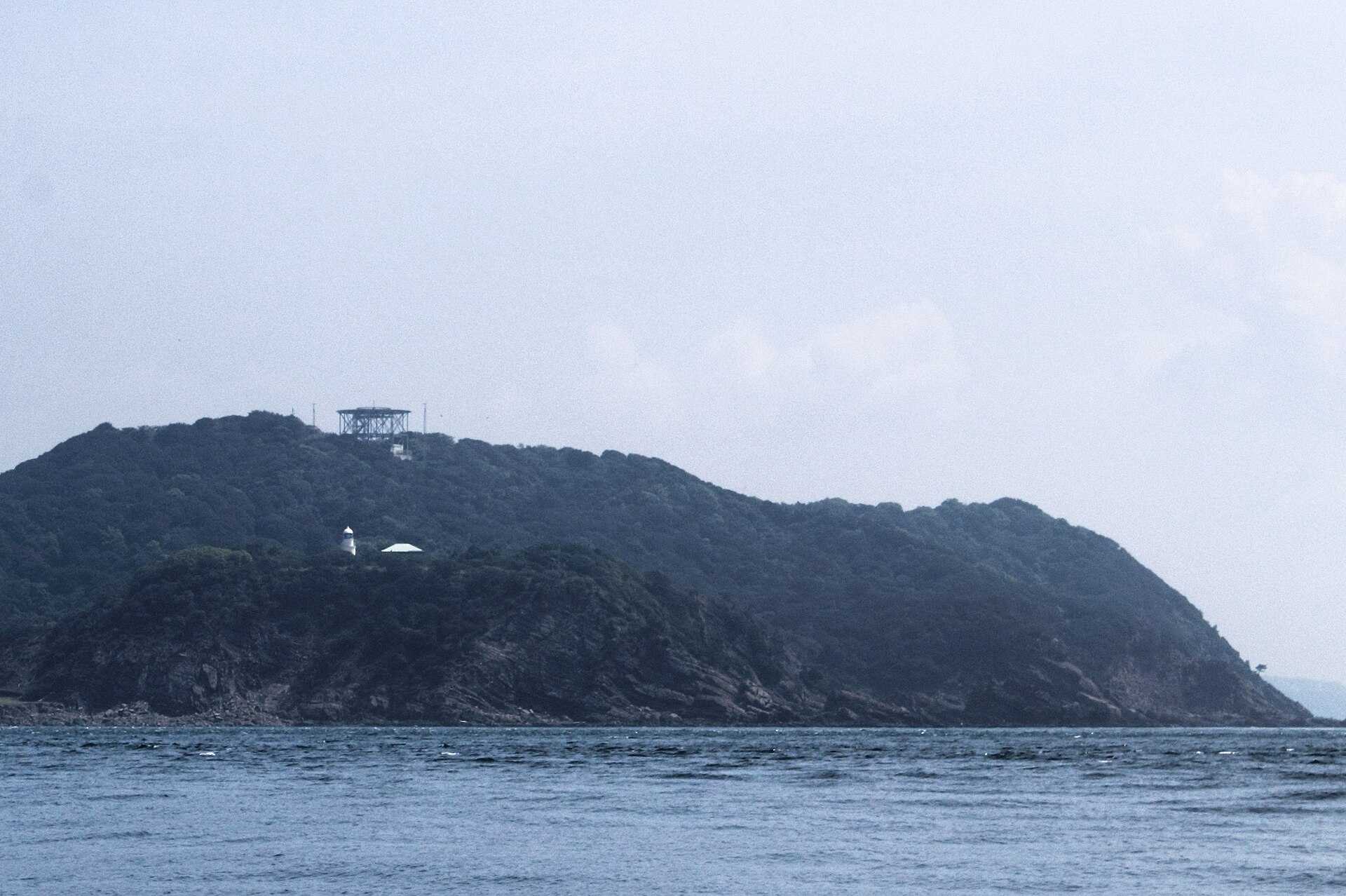
  • Tomogashima: Exploring the Abandoned Forts of an Uninhabited Island

    Tomogashima: Exploring the Abandoned Forts of an Uninhabited Island

    Moss-covered brick tunnels, rusting gun emplacements and empty barracks slowly being reclaimed by the forest: Tomogashima feels like an island from an adventure film, yet it is only about 20 minutes by ferry from the mainland.

    Islands at the gate of Osaka Bay

    Tomogashima is a group of four uninhabited islands (Okinoshima, Jinoshima, Torajima and Kamijima) in the Kitan Strait between the Kii Peninsula and Awaji Island. Because they guard the entrance to Osaka Bay, the islands were fortified from the Meiji era onward and served as a military base until the end of the Second World War. After the war the forts were abandoned, and the islands became part of the Setonaikai National Park.

    Visitors can land only on Okinoshima, the largest island. Its forest paths link several of the old batteries, a lighthouse and lookout points over the strait. Many people say the overgrown ruins look like a scene from Studio Ghibli’s Castle in the Sky, which has made the island popular with photographers.

    Highlights

    • The Third Battery: the largest and most atmospheric ruin, with long dark tunnels and brick ammunition rooms. Bring a flashlight.
    • Tomogashima Lighthouse: one of the oldest Western-style lighthouses in Japan, built in the Meiji period.
    • Mount Takenosu Observatory: views across the strait to Awaji Island.
    • Pebble beaches, wildflowers and plenty of quiet.

    Planning your trip

    • The ferry to Okinoshima is run by Tomogashima Kisen from Kada Port. The crossing takes about 20 minutes, and a round trip costs around 2,000–2,200 yen for adults.
    • The number of sailings changes by season. Ferries may not run on some weekdays or in rough weather, so check the timetable before you go.
    • Do not miss the last ferry. There are no shops, hotels or regular services on the island.
    • A loop hike visiting the main sights takes about two to three hours. The paths are steep in places and some ruins are dark and slippery, so wear proper shoes.
    • Camping is possible at designated sites if you reserve in advance, a rare chance to spend a night on a deserted island close to a major city.

    Bring: water, food, a flashlight or headlamp, insect repellent in summer, and a bag to carry all your trash back to the mainland.

    Getting there

    From Wakayama City, take the Nankai Kada Line from Wakayama-shi Station to Kada Station (about 30 minutes). Kada Port is about a 20-minute walk from the station. Kada itself is a charming fishing town, home to Awashima Shrine, which is famous for its thousands of dolls.

    Sources and further reading

    Featured image: 藤谷良秀 / Wikimedia Commons (CC BY-SA 4.0). Practical details such as prices, hours and schedules change often. Please check the official sources before you travel.
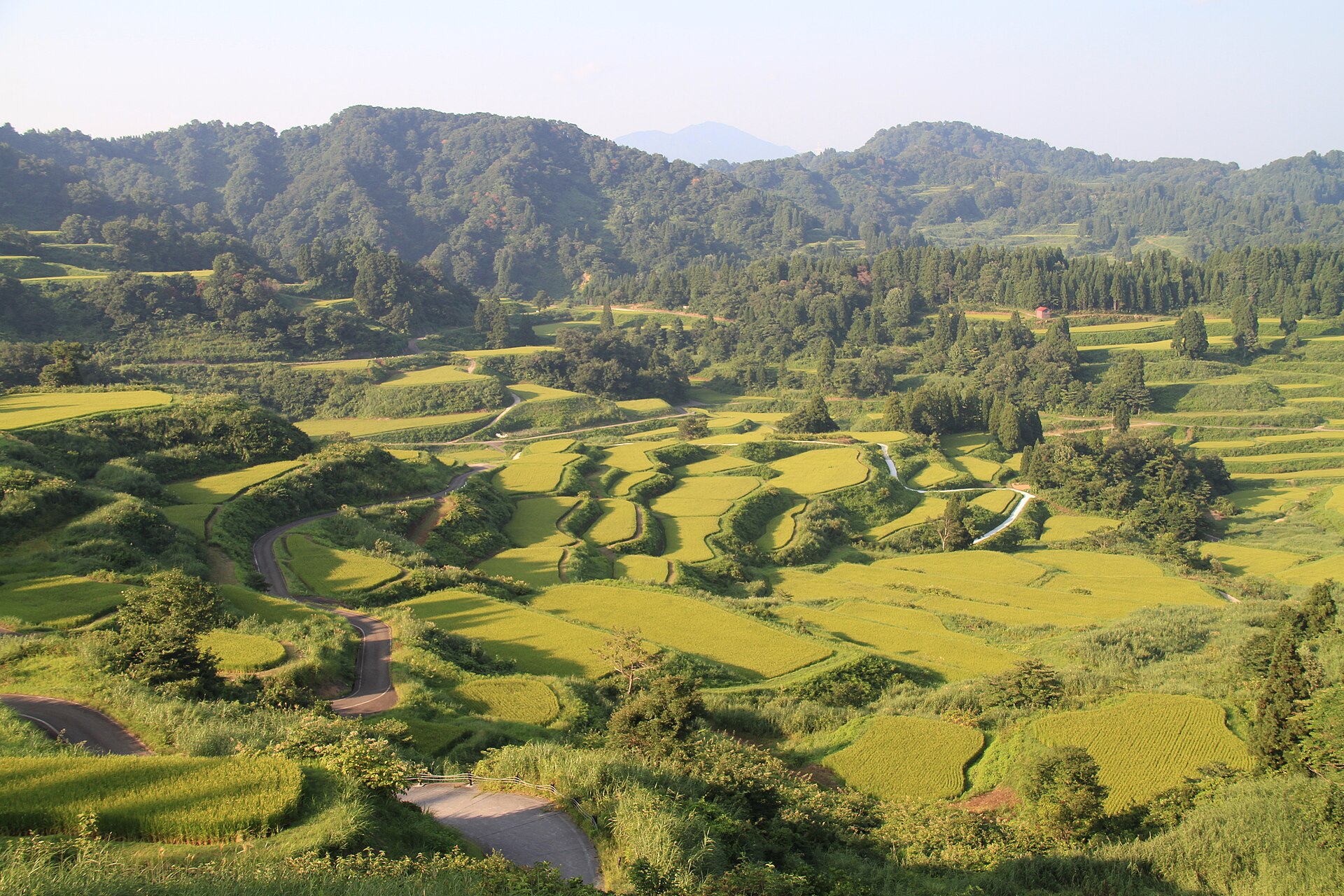
  • Hoshitoge Rice Terraces: Japan’s Mirror Fields in Snow Country

    Hoshitoge Rice Terraces: Japan’s Mirror Fields in Snow Country

    Niigata is famous for producing some of Japan’s best rice, and nowhere shows the bond between people and land more beautifully than the Hoshitoge Rice Terraces.

    A landscape made by snow and people

    Hoshitoge is in the Matsudai area of Tokamachi City, deep in “snow country”, where winters bring some of the heaviest snowfall in the world. Over generations, local farmers carved around 200 rice paddies into the steep slopes. The water that fills them comes not from rivers but from rain, groundwater and snowmelt, slowly released by beech forests at the top of the mountain.

    The terraces are selected as one of “Japan’s 100 Most Beautiful Villages” and appeared in the opening titles of the NHK historical drama Tenchijin.

    When to visit

    • Spring (after the snow melts until June): the flooded paddies become a “water mirror”, reflecting the sky, clouds and sunrise.
    • Summer: bright green rice and the sound of frogs and dragonflies.
    • Autumn (late October to November): after the harvest the fields are flooded again, and mornings often bring a sea of clouds.
    • Winter: a silent world of snow. Cars cannot reach the terraces because the road is not cleared.

    Sunrise is the most popular time for photographers. On a calm morning you may find dozens of tripods lined up at the viewpoint. Arrive early and be patient.

    Respect the farmers

    The terraces are on private land and are still worked by local farmers. View them from the road and the designated parking area, never walk on the paddy ridges, and keep drones on the ground unless you have permission. Some terraces in Tokamachi are supported by a shared ownership system, in which people across Japan pay a yearly fee to help keep the paddies farmed and receive rice in return.

    Stay longer: rural Tokamachi

    The surrounding area is full of small farming hamlets, guesthouses and old farmhouses converted into inns. Tokamachi is also the main venue of the Echigo-Tsumari Art Triennale, held every three years, when contemporary art installations appear in fields, schools and empty houses. A stay in a local guesthouse lets you see the terraces at dawn without a long drive.

    Getting there

    • From Tokyo, take the Joetsu Shinkansen to Echigo-Yuzawa (about 80 minutes), then the Hokuhoku Line to Matsudai Station.
    • From Matsudai Station, the terraces are about 20 minutes by taxi or rental car.
    • By car, allow about one hour from the Muikamachi Interchange (Kan-Etsu Expressway).

    Sources and further reading

    Featured image: Fumihiko Ueno / Wikimedia Commons (CC BY 3.0). Practical details such as prices, hours and schedules change often. Please check the official sources before you travel.
  • Ajimu, Oita: Where Japan’s Farm Stay Movement Began

    Ajimu, Oita: Where Japan’s Farm Stay Movement Began

    Forget hotels for a night. In Ajimu, you stay in a farmhouse, cook dinner with your hosts, help in the fields and leave feeling like a distant relative.

    The birthplace of green tourism in Japan

    Ajimu (Ajimu-machi, now part of Usa City in Oita Prefecture) is a quiet farming area of rice paddies, vineyards and forested hills in northern Kyushu. Like many rural areas, it faced an aging population and fewer young farmers. In the 1990s, local residents looked to Europe, where staying on farms was already a popular holiday, and started inviting guests into their own homes.

    The program, launched in 1996, became the model for noson minpaku (farm stays) across Japan. Today dozens of households in and around Ajimu welcome guests, and the town is still regarded as the home of Japanese green tourism.

    What a farm stay is like

    Every household is different, which is the charm. A typical stay of one night and two days might include:

    • Picking vegetables or fruit from the family’s fields, depending on the season.
    • Cooking dinner together using local produce, and eating around the same table as your hosts.
    • Seasonal farm work such as rice planting, harvesting or making rice cakes.
    • Learning everyday skills: making pickles, chopping firewood or preparing a wood-fired bath.

    Guests are treated not as customers but as family. The local saying is that you arrive as a guest and leave as a relative.

    Things to see nearby

    • Ajimu Winery and the local grape farms, as the area is known for its wine and grape juice.
    • Usa Jingu, the head shrine of all Hachiman shrines in Japan.
    • Higashi-Shiiya Falls, a powerful waterfall in the hills.
    • Yufuin and Beppu hot spring towns, both within about an hour by car.

    How to book

    Farm stays in Ajimu are coordinated by the local green tourism association, and some tour companies also include an Ajimu farm stay in multi-day Kyushu itineraries. Many hosts speak little English, so a translation app and a phrasebook help a lot. Book well ahead and tell your hosts about any dietary needs in advance.

    Getting there

    Ajimu is about 5 minutes from the Ajimu Interchange on the Usa-Beppu Road. A car is the easiest option. Some hosts can arrange to meet you at a local meeting point, so ask when you book.

    Sources and further reading

    Featured image: katorisi / Wikimedia Commons (CC BY 2.5). Practical details such as prices, hours and schedules change often. Please check the official sources before you travel.
  • Zen at Eiheiji: Staying Overnight at a Working Zen Monastery

    Zen at Eiheiji: Staying Overnight at a Working Zen Monastery

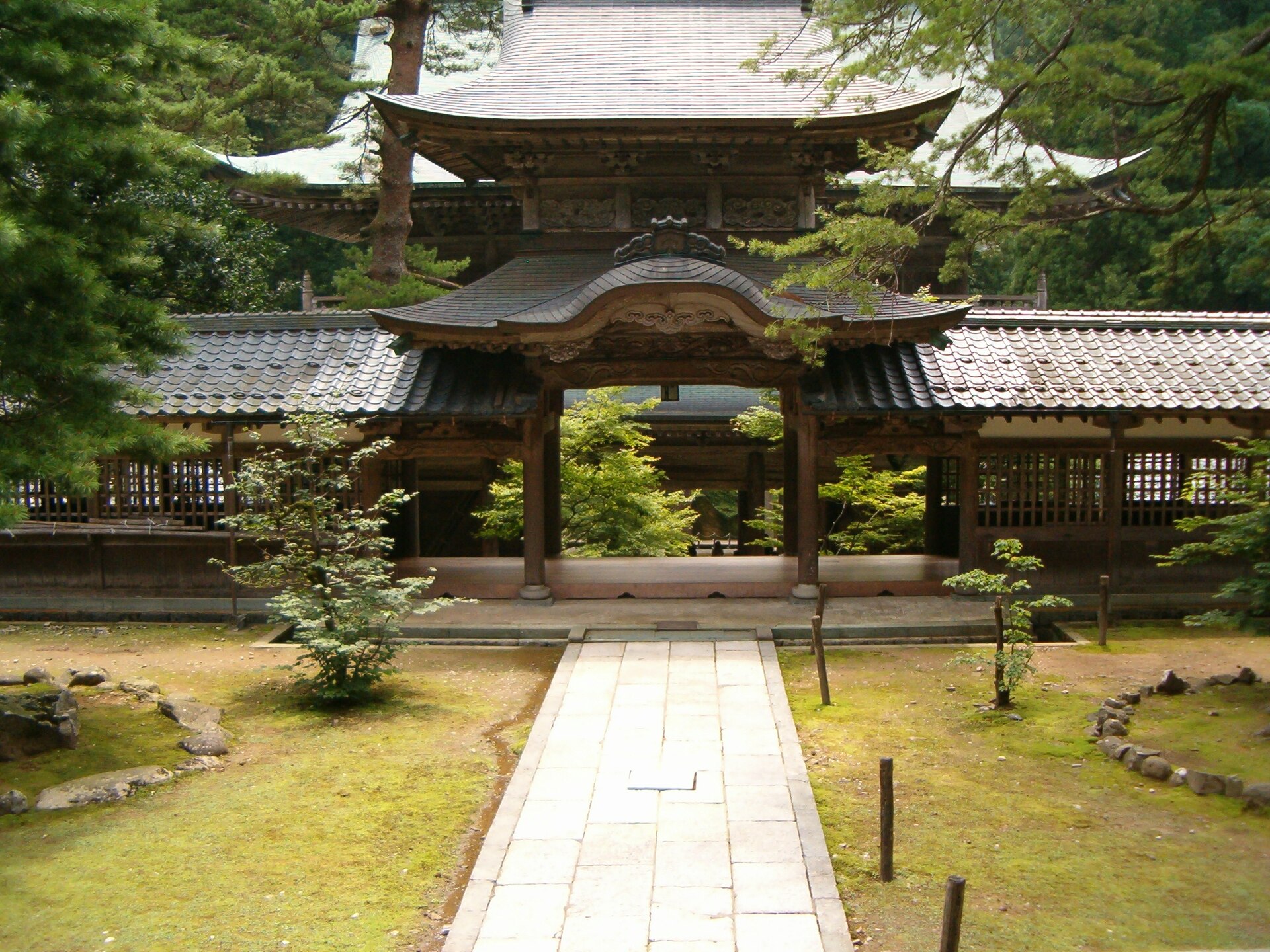
    Founded in 1244, Eiheiji (“Temple of Eternal Peace”) is not a museum. Around a hundred young monks live and train here, following a daily routine that has barely changed in centuries.

    The head temple of Soto Zen

    Eiheiji was founded by the Zen master Dogen (1200–1253), who brought Soto Zen from China to Japan. Hidden in a forest of giant cedars in the mountains of Fukui Prefecture, the temple has around 70 buildings connected by covered corridors and wooden staircases. Monks polish these floors every day as part of their training.

    Day visitors can walk through much of the complex, but the real Eiheiji is the rhythm of monastic life: zazen meditation, chanting, cleaning and silent meals.

    Overnight Zen programs

    Eiheiji has long offered overnight programs (known as sanro and sanzen) in which guests follow the monks’ schedule. Participants typically:

    • Practice zazen (seated meditation) under the guidance of a monk.
    • Join the early morning service, which begins before dawn.
    • Eat shojin ryori in the monastic style, in complete silence and following strict etiquette.
    • Sleep in communal rooms and use shared baths.

    Important: because Eiheiji is an active training monastery, overnight places are very limited and the programs are sometimes suspended or offered only in Japanese. The temple has announced periods when the program is not available to international visitors. Always check the official website before planning your trip, and apply well in advance (at least a month ahead is usually required).

    An easier alternative: Hakujukan

    If you cannot get a place in the monastery itself, Hakujukan is a modern lodging in front of the temple promoted by Eiheiji as part of its “Zen village” project. Guests can join some of the temple’s activities, such as the early morning service, and staff trained by Eiheiji monks guide beginners through zazen. It is a comfortable way to experience Zen while still waking up before dawn.

    Etiquette for visitors

    • Dress modestly and speak quietly. This is a place of practice.
    • Photography is restricted in some areas. Follow the signs and the monks’ instructions.
    • Do not expect a hotel experience inside the monastery. The point is discipline, not comfort.

    Getting there

    From JR Fukui Station, take the Echizen Railway to Eiheiji-guchi and change to a bus, or take a direct express bus from Fukui Station (about 30 minutes). Fukui is now on the Hokuriku Shinkansen, making it easier to reach from Tokyo and Kanazawa.

    Sources and further reading

    Featured image: Supermidget / Wikimedia Commons (Public domain). Practical details such as prices, hours and schedules change often. Please check the official sources before you travel.

  • Toge: Sleeping in a Pilgrim Lodge Village at the Foot of Mount Haguro

    Toge: Sleeping in a Pilgrim Lodge Village at the Foot of Mount Haguro

    At the base of Mount Haguro in Yamagata lies Toge, a quiet street lined with old wooden lodges and thatched gates. For hundreds of years, this is where pilgrims slept before climbing the sacred mountains.

    A village built for pilgrims

    In its heyday, the Dewa Sanzan drew huge numbers of pilgrims from across eastern Japan, and Toge grew into a village of shukubo, lodges where travelers could rest, purify themselves and receive guidance. Many lodges are still run by the same families, some for more than ten generations, and the owners are often yamabushi themselves.

    Unlike the large temple lodgings of Koyasan, a stay in Toge feels personal. You sleep in a family house, eat with other guests and can talk with your host about Shugendo, local legends and the mountains.

    Shojin ryori of the mountains

    Dinner is the highlight. Dewa Sanzan’s version of shojin ryori uses wild mountain vegetables (sansai), mushrooms, bamboo shoots and sesame tofu, served on lacquerware in many small dishes. The flavors change with the seasons and reflect the idea that the mountains themselves provide everything you need.

    Things to do from Toge

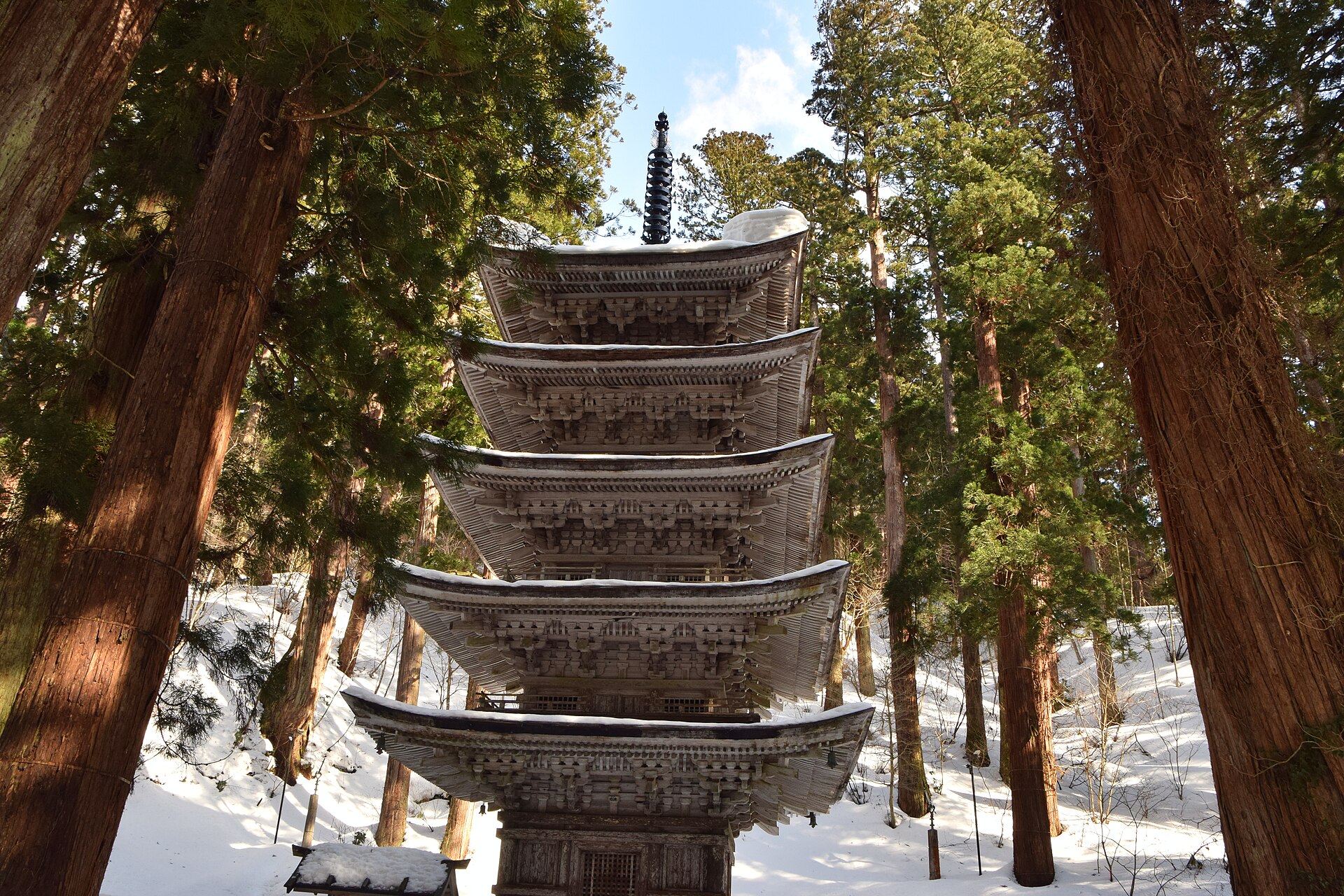
    • Climb the stone steps of Mount Haguro, past the Jijisugi cedar, said to be about 1,000 years old, and the national treasure five-storied pagoda. It is beautiful in fresh snow.
    • Join a short yamabushi experience or a longer training program arranged through your lodge.
    • Visit the Ideha Museum near the summit to learn about Shugendo history.
    • In summer, continue by bus to Mount Gassan and Mount Yudono to complete the three-mountain pilgrimage.

    Tips for staying in a shukubo

    • Most lodges have a small number of rooms. Reserve in advance, and contact the lodge directly or book through an English-language service if you do not speak Japanese.
    • Meals are served at fixed times. Let your host know about allergies when you book.
    • Winters are long and snowy. Many hiking routes beyond Mount Haguro are closed outside summer, but a winter stay can be magical.

    Getting there

    Buses run from JR Tsuruoka Station to Toge in about 40 minutes and continue to the top of Mount Haguro. Many lodges will give you directions from the bus stop.

    Sources and further reading

    Featured image: Raita Futo from Tokyo, Japan / Wikimedia Commons (CC BY 2.0). Practical details such as prices, hours and schedules change often. Please check the official sources before you travel.