Blog

  • Training with the Yamabushi: Shugendo on the Three Sacred Mountains of Dewa

    Training with the Yamabushi: Shugendo on the Three Sacred Mountains of Dewa

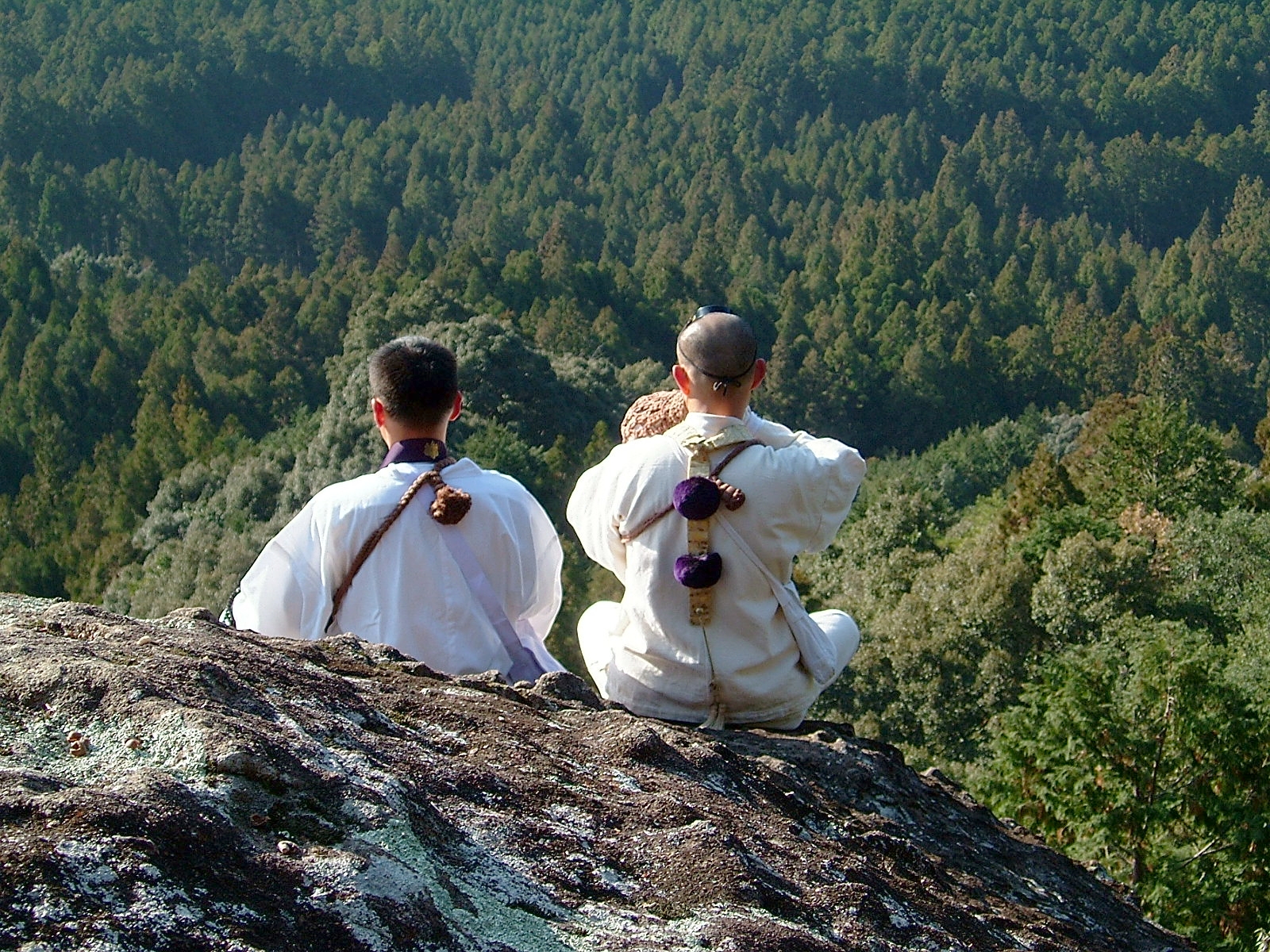
    Dressed in white, blowing conch shells and walking up sacred peaks, the yamabushi of northern Japan keep alive one of the country’s oldest spiritual traditions. On the Dewa Sanzan, ordinary travelers can follow in their footsteps.

    What is Shugendo?

    Shugendo is a form of mountain asceticism that blends Shinto nature worship, esoteric Buddhism and folk beliefs. Its practitioners, the yamabushi (“those who lie in the mountains”), believe that mountains are sacred and that hard physical training in nature brings spiritual rebirth.

    Most yamabushi today are not full-time monks. Many have ordinary jobs, and in Haguro many run family pilgrim lodges, returning to the mountains for training and festivals.

    The Dewa Sanzan

    The Dewa Sanzan, or “Three Mountains of Dewa”, in Yamagata Prefecture is one of the most important centers of Shugendo in Japan. It has a history said to stretch back around 1,400 years.

    • Mount Haguro (414 m) represents the present. A stone path of more than 2,000 steps climbs through ancient cedars, past a beautiful five-storied pagoda.
    • Mount Gassan (1,984 m) represents death and the past. It is the highest of the three and open to hikers only in summer.
    • Mount Yudono (1,500 m) represents rebirth and the future. Its sacred site is so holy that photography is forbidden.

    Walking the three mountains in order is a symbolic journey through life, death and rebirth.

    What happens in yamabushi training?

    Training programs (shugyo) are led by certified yamabushi and range from a single day to several days. Details vary by program, but they can include:

    • Dressing in the white robes of the yamabushi.
    • Long silent hikes on sacred trails, often in rain or darkness.
    • Takigyo, meditation under a waterfall.
    • Purification rituals, chanting and simple vegetarian meals.
    • Staying in a shukubo pilgrim lodge in the village of Toge at the foot of Mount Haguro.

    Participants are expected to follow instructions without question. Much of the training is done in silence, and the only reply you are allowed is “uketamo“, meaning “I humbly accept”. Workshops organized by the Haguro tourist association typically run between August and October, while private lodges and operators offer programs at other times too.

    Who is it for? You do not need to be religious, but you do need to be reasonably fit and ready for discomfort, cold water and early starts. Programs for international visitors with English support are available. Book well in advance.

    Getting there

    The gateway town is Tsuruoka. From Tokyo, take the Joetsu Shinkansen to Niigata and transfer to a limited express to Tsuruoka, or fly to Shonai Airport. Buses run from Tsuruoka Station to Toge and the summit of Mount Haguro.

    Sources and further reading

    Featured image: 唐山健志郎 (Kenshiro Karayama) / Wikimedia Commons (CC BY-SA 3.0). Practical details such as prices, hours and schedules change often. Please check the official sources before you travel.
  • A Night in a Koyasan Temple: Shukubo, Shojin Ryori and the Okunoin Night Walk

    A Night in a Koyasan Temple: Shukubo, Shojin Ryori and the Okunoin Night Walk

    High in the mountains of Wakayama, Koyasan (Mount Koya) is one of the holiest places in Japan and one of the best places to sleep inside a working Buddhist temple.

    The mountain of Kobo Daishi

    Koyasan was founded in 816 by the monk Kukai, known after his death as Kobo Daishi, as the center of Shingon Buddhism. Today the mountaintop town is home to Kongobu-ji, the head temple of the Shingon school, and to Okunoin, where Kobo Daishi is believed to rest in eternal meditation. The area is part of the UNESCO World Heritage Site “Sacred Sites and Pilgrimage Routes in the Kii Mountain Range”.

    What is a shukubo?

    A shukubo is lodging run by a temple. Pilgrims have stayed in them for centuries. At Koyasan, more than 50 temples offer rooms, from simple and traditional to surprisingly comfortable. Rooms are usually Japanese style, with tatami mats and futons, and many temples have beautiful gardens and halls decorated with old paintings and calligraphy.

    A typical stay

    • Afternoon: check in, walk around the temple grounds and visit Danjo Garan and Kongobu-ji.
    • Evening: dinner of shojin ryori, the vegetarian cuisine of Buddhist monks. It contains no meat, no fish and no strong-smelling vegetables such as garlic or green onions. Local specialties include sesame tofu, koya-dofu (freeze-dried tofu) and yuba (tofu skin).
    • Night: join a guided night tour of Okunoin (see below).
    • Early morning: the morning service usually starts around 6:00 and lasts roughly 40 minutes. Guests are welcome to sit in as the monks chant sutras by candlelight. Attendance is normally optional.
    • After breakfast: many temples offer ajikan (Shingon meditation), sutra copying or a goma fire ritual.

    Okunoin after dark

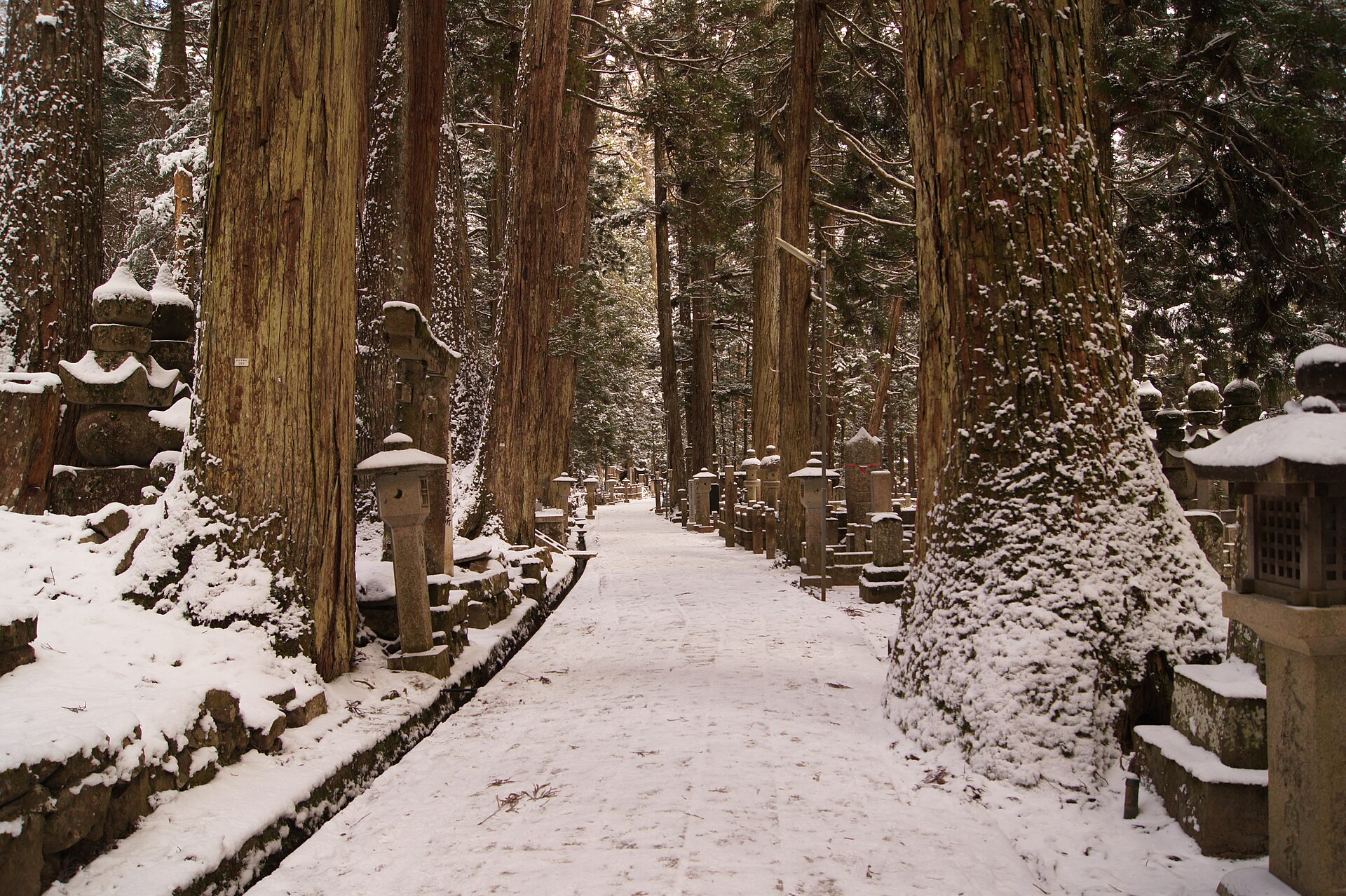
    Okunoin is the largest cemetery in Japan, with more than 200,000 graves and memorials lining a path of about two kilometers through giant cedar trees. By day it is atmospheric. At night, with only stone lanterns lighting the way, it is unforgettable. Guided night tours, often led by a monk who explains Buddhist beliefs and the stories behind famous graves, leave from the town in the evening. Bring a light jacket. The mountain is cold even in summer.

    Practical tips

    • Book well ahead, especially for autumn leaves and weekends. Many temples can be reserved through the Koyasan Shukubo Association.
    • Expect shared toilets and baths in older temples, early dinners and fixed bath times.
    • Most guests arrive from Osaka: take the Nankai Koya Line from Namba to Gokurakubashi, then the cable car and a short bus ride.
    • Winters are snowy and cold. Snow on the cedars of Okunoin is magical, but bring warm clothes.

    Sources and further reading

    Featured image: Crystalline Radical / Wikimedia Commons (CC BY 2.0). Practical details such as prices, hours and schedules change often. Please check the official sources before you travel.
  • Whitewater Rafting in Oboke Gorge: Japan’s Wildest River

    Whitewater Rafting in Oboke Gorge: Japan’s Wildest River

    Ask Japan’s rafting guides where the best whitewater in the country is and most of them will point to the same place: the Yoshino River as it cuts through the Oboke and Koboke gorges in the heart of Shikoku.

    The river

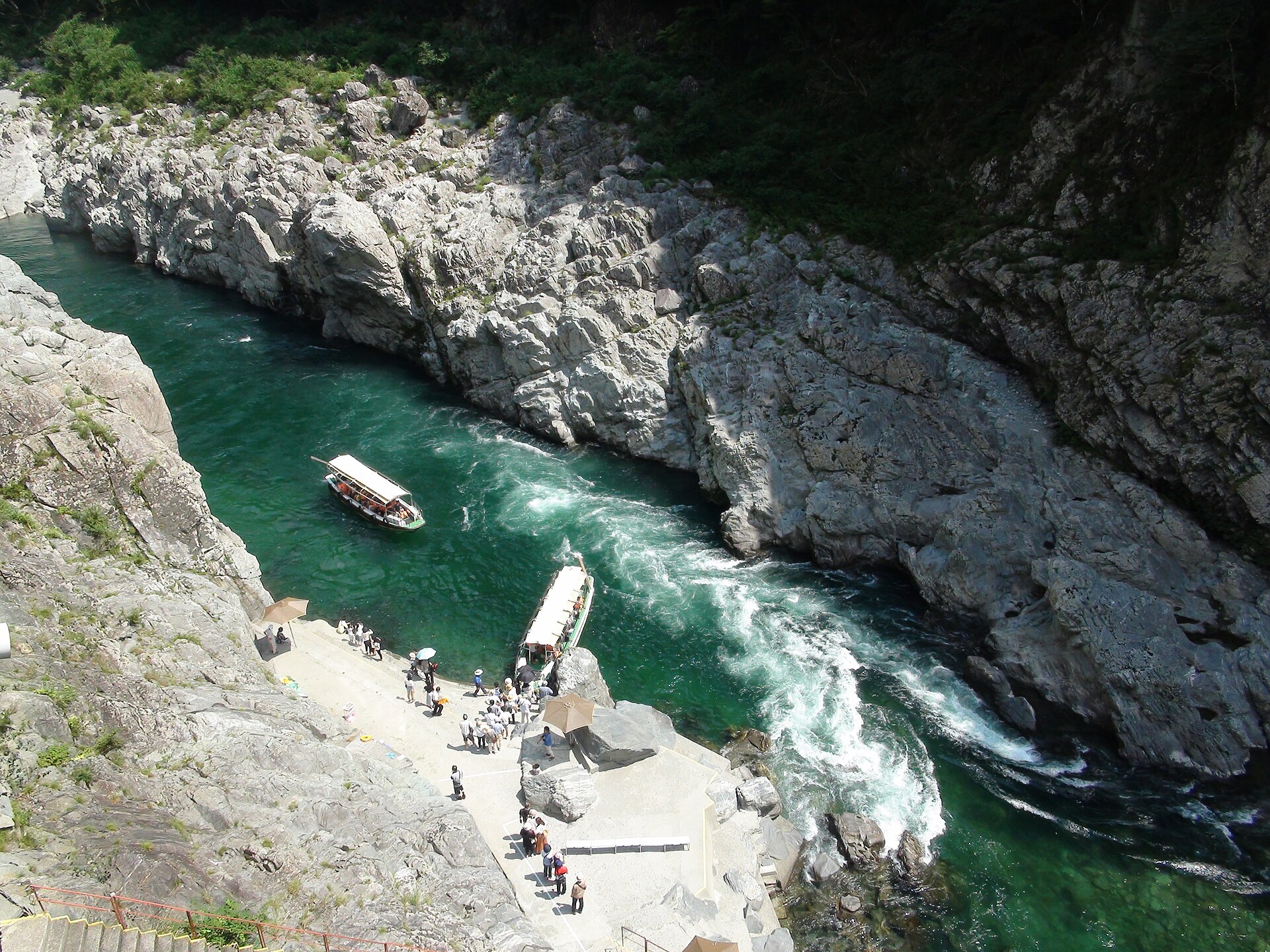
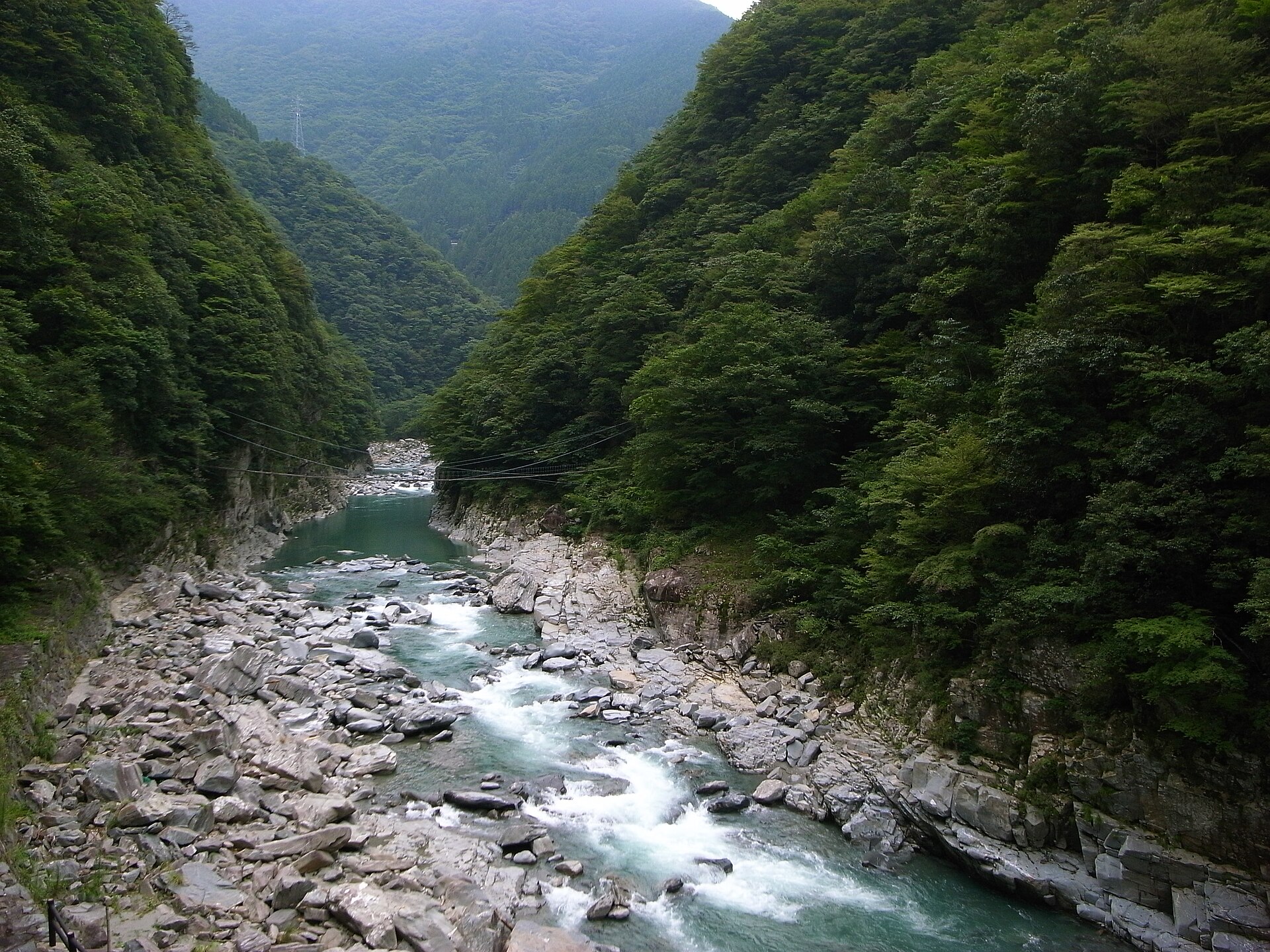
    The Yoshino is the longest river on Shikoku, at about 194 kilometers from Kochi Prefecture to the sea in Tokushima. In its middle section the river has carved a deep gorge through the Shikoku Mountains, creating clear, jade-green water that tumbles over a long series of rapids. The names Oboke and Koboke are often explained as “big dangerous steps” and “little dangerous steps”, which tells you something about the terrain.

    The river is rated up to Class 4, and the area hosted the World Rafting Championship in 2017. Despite its reputation, there are also gentler sections, so beginners and families can join too.

    Tour options

    • Half-day courses usually run the Oboke section, with rapids up to around Class 3. This is the best choice for first-timers.
    • Full-day courses include the more demanding Koboke section, with rapids up to Class 4.
    • Many outfitters add cliff jumps from the white rocks and swimming in calm pools between the rapids.

    Several operators run tours from the Oboke area, and some have English-speaking guides. Equipment such as wetsuits, helmets and life jackets is normally included.

    When to go

    The rafting season usually runs from around March to November. Summer (July to September) is the most popular time thanks to warm water, while spring snowmelt and heavy rain can make the river faster and more exciting. Water levels change with the weather, and tours may be cancelled or rerouted after heavy rain.

    If rafting is not your thing

    You can still enjoy the gorge from the water on the Oboke Gorge sightseeing boat, a calm 30-minute cruise past striking rock formations. In spring, hundreds of carp streamers (koinobori) are strung across the gorge.

    Getting there

    • JR Oboke Station on the Dosan Line is the main gateway. Limited express trains connect it with Okayama, Kochi and Awa-Ikeda.
    • By car, take the Ikawa-Ikeda Interchange and follow National Route 32 along the river.
    • Stay nearby and combine your trip with the Iya Valley vine bridges and Nagoro.

    Sources and further reading

    Featured image: さかおり / Wikimedia Commons (CC BY-SA 4.0). Practical details such as prices, hours and schedules change often. Please check the official sources before you travel.
  • Nagoro: The Scarecrow Village Where Dolls Outnumber People

    Nagoro: The Scarecrow Village Where Dolls Outnumber People

    Drive deep into the Iya Valley and you may notice people waiting at a bus stop, chatting on a bench or working in a field. Look again: they are dolls. Welcome to Nagoro, known in Japanese as Kakashi no Sato, the scarecrow village.

    How a village of dolls began

    Nagoro is a tiny hamlet in the city of Miyoshi, Tokushima Prefecture. Like many villages in rural Japan, its population has shrunk dramatically over the decades, and only a few dozen people remain.

    In the early 2000s, local resident Tsukimi Ayano returned to Nagoro after many years living in Osaka. She made a scarecrow in the likeness of her father to keep birds away from the seeds in her vegetable patch. Neighbours liked it and asked for their own, and she kept going. She began to recreate former residents who had died or moved away, placing them where they used to spend their days.

    Today, several hundred figures are spread around the village. Reports put the number at around 350 or more, many times the number of human residents.

    What you will see

    • Dolls fishing by the river, resting by the road and gathered at the bus stop.
    • The former elementary school, which closed when the last pupils left. Its classroom is filled with doll pupils and teachers, a scene that is both charming and sad.
    • Life-sized figures of farmers, construction workers and elderly couples, each with its own face and clothes.

    Some visitors find the place unsettling, especially at dusk. Others find it heartwarming. Either way, Nagoro is a striking picture of what depopulation means for rural Japan, and of one person refusing to let her home be forgotten.

    Visiting respectfully

    • Nagoro is a real community, not a theme park. Keep your voice down, do not enter private land, and never move or touch the dolls.
    • There are almost no shops or restaurants, so bring water and snacks.
    • In winter the mountain roads can be icy. Check the weather before you go.

    Getting there

    Nagoro is in Oku-Iya (Inner Iya), roughly one hour by car beyond the Iya Kazurabashi vine bridge, on the road toward Mount Tsurugi. Public transport is extremely limited, so a rental car from Oboke or Awa-Ikeda is the practical choice. Combine your visit with the Oku-Iya double vine bridges, which are on the way.

    Sources and further reading

    Featured image: na0905 / Wikimedia Commons (CC BY 2.0). Practical details such as prices, hours and schedules change often. Please check the official sources before you travel.

  • Crossing the Vine Bridges of the Iya Valley, Shikoku

    Crossing the Vine Bridges of the Iya Valley, Shikoku

    Most visitors to Japan never set foot on Shikoku, and few who do make it as far as the Iya Valley. That is exactly why it is worth the effort: steep, forested slopes, farmhouses clinging to the hillsides, and bridges made of mountain vines that creak under your feet.

    A valley of hideaways

    The Iya Valley follows the Iya River through the western part of Tokushima Prefecture. For centuries it was one of the most isolated places in Japan, and local legend says that warriors of the defeated Heike clan fled here after losing the Genpei War in the 12th century. Whether or not the story is true, the valley still feels like a place where people came to disappear.

    The valley is usually divided into two parts. Nishi-Iya (West Iya) is easier to reach and has the best-known bridge, hot spring hotels and a few restaurants. Oku-Iya (Inner Iya, also called Higashi-Iya) lies much further up the valley and is very hard to reach without a car.

    Iya Kazurabashi: the classic crossing

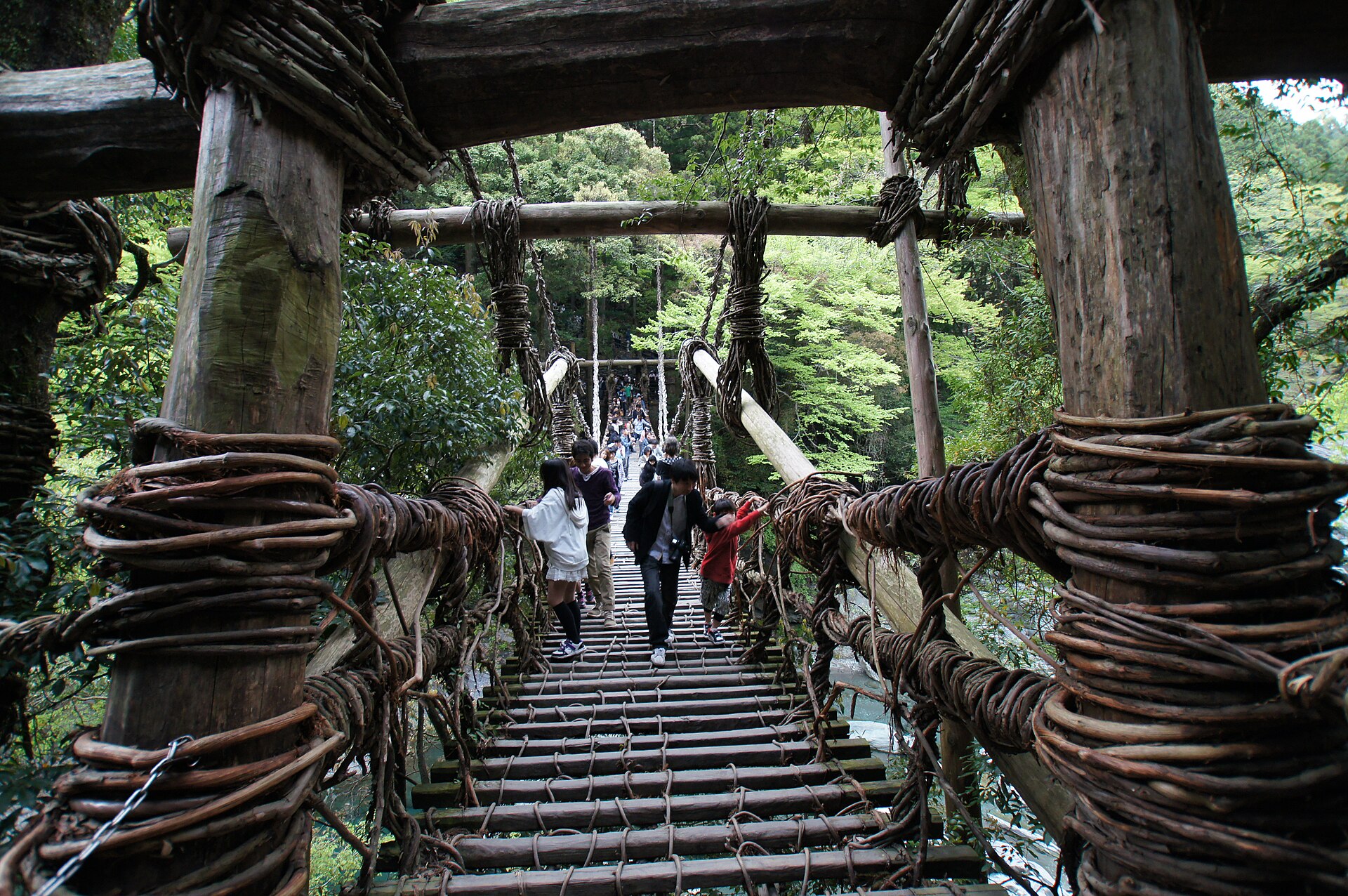
    In the past, around 13 vine bridges spanned the river and were a lifeline for villagers moving people and goods across the gorge. Only three remain today. The largest, the Iya Kazurabashi, is about 45 meters long and hangs roughly 15 meters above the water. It is a designated Important Tangible Folk Cultural Property of Japan.

    The bridge is woven from hardy kiwi-family vines. For safety it is now reinforced with hidden steel cables, and the vines are replaced every few years, which can close the bridge for some weeks in winter. Walking across is a slightly nerve-racking experience: the gaps between the wooden slats are wide, the whole structure sways, and you can see straight down to the jade-green river.

    LocationZentoku, Nishi-Iya, Miyoshi City, Tokushima
    Hours (approx.)8:00–17:00 most of the year; longer hours in spring and summer
    AdmissionAround 550 yen for adults
    Night viewThe bridge is lit up in the evening, but you cannot cross it at night

    Oku-Iya Double Vine Bridges

    If you have a car, keep driving east for about an hour along narrow mountain roads to reach the Oku-Iya Niju Kazurabashi, a pair of vine bridges known locally as the “husband and wife” bridges. They are a little smaller than the main bridge but far quieter, and they hang over a beautiful stretch of clear river.

    Next to the bridges you can also try the yaen, a hand-pulled cable car: you sit in a wooden box and haul yourself across the gorge with a rope. It is harder work than it looks. The Oku-Iya bridges are closed in winter (roughly December to March), and the autumn leaves here usually turn earlier than in the rest of the valley, around late October to early November.

    Getting there

    • By bus: local buses run from JR Awa-Ikeda Station (about 60–70 minutes) and from JR Oboke Station (about 25–30 minutes) to the Iya Kazurabashi area. Services are infrequent, so check the timetable in advance.
    • By car: the main bridge is about 70 minutes from the Ikawa-Ikeda Interchange. A rental car is strongly recommended if you want to see Oku-Iya.
    • Combine with: Oboke Gorge rafting and the scarecrow village of Nagoro, both in the same area.

    Tips for your visit

    • Wear shoes with a good grip and keep phones and cameras on a strap. Things dropped through the bridge are gone for good.
    • Come early in the morning to cross the main bridge before the tour buses arrive.
    • Stay overnight in the valley. A night in a renovated farmhouse or a hot spring inn is what makes Iya special.

    Sources and further reading

    Featured image: ume-y / Wikimedia Commons (CC BY 2.0). Practical details such as prices, hours and schedules change often. Please check the official sources before you travel.